
Flying after cosmetic surgery: why timing matters and what risks you face
Flying after cosmetic surgery is one of the most common — and most dangerous — mistakes that patients make. Whether you have had a procedure abroad and need to get home, or you have booked a holiday shortly after an operation in the UK, the pressure to get on a plane too soon can feel overwhelming.
The risks of flying after cosmetic surgery are serious and well-documented. In some cases, boarding a flight before your body is ready can be life-threatening. Many patients underestimate just how dangerous flying after cosmetic surgery can be during the critical recovery window. This guide explains exactly why timing matters, what the medical risks are, how long you should wait depending on your procedure, and what your options are if something has already gone wrong.
Why flying is so dangerous
Aircraft cabins are not the same environment as sea level. The air pressure is lower, oxygen levels are reduced, and the humidity is significantly drier than normal. For a healthy passenger, these conditions are uncomfortable but manageable. For someone recovering from surgery, they can cause serious harm.
During any cosmetic procedure, your body undergoes significant trauma. Blood vessels are disrupted, tissues are cut and repaired, and your circulatory system is under stress. In the days and weeks that follow, your blood is in a hypercoagulable state — meaning it clots more readily than usual. This is a natural part of healing, but it also creates a dangerous window of vulnerability.
When you combine this heightened clotting risk with the reduced mobility, low cabin pressure, and dehydration of air travel, the consequences of flying can be catastrophic. Medical research from surgical teams treating patients hospitalised after flying home too soon has shown that simulated flight conditions can significantly impair blood supply to operated tissues, potentially causing tissue death, wound breakdown, and life-threatening clots.
The most serious risks: DVT, pulmonary embolism, and more
Deep vein thrombosis (DVT)
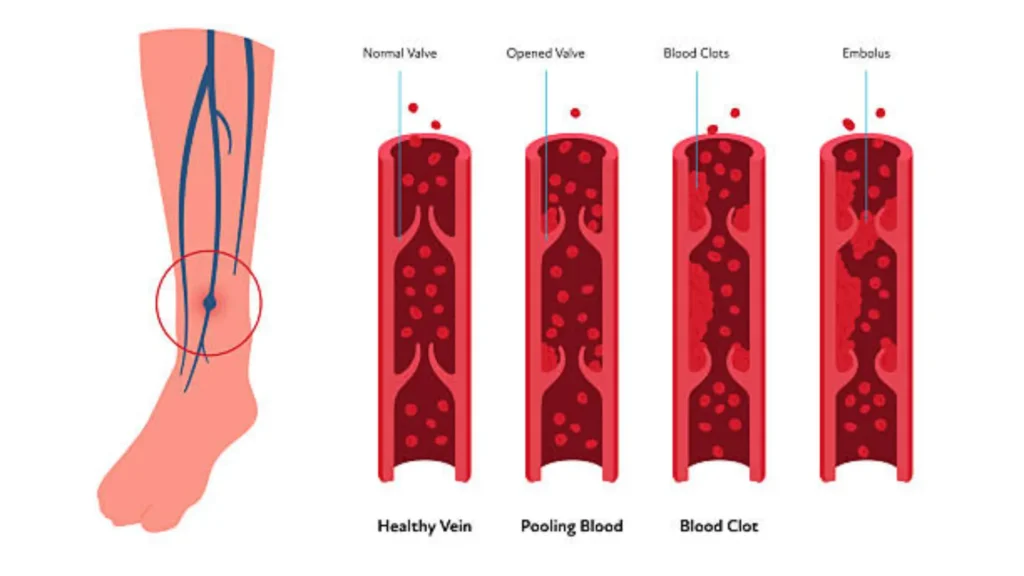
Cosmetic surgery DVT risk is the primary reason surgeons advise patients to delay flying. Deep vein thrombosis occurs when a blood clot forms in a deep vein, most commonly in the legs. Prolonged sitting during a flight restricts blood flow in the lower limbs, and when combined with the post-surgical clotting tendency, the risk increases dramatically.
DVT does not always cause obvious symptoms. Some patients develop a clot without realising it, only for the situation to worsen significantly during or after the flight.
Pulmonary embolism
If a DVT clot breaks away from the vein wall and travels through the bloodstream to the lungs, it becomes a pulmonary embolism — a potentially fatal condition. This is one of the leading causes of death in the period following surgery. It can develop suddenly and without warning, and it requires immediate emergency treatment.
Increased swelling and oedema
The changes in cabin pressure during a flight cause tissues to swell. For someone who has just had liposuction, a tummy tuck, or breast surgery, this swelling can be severe and extremely painful. It places additional strain on incision sites, increases the risk of wound breakdown, and can set back recovery significantly.
Wound infection and dehiscence
Dry cabin air dehydrates healing tissue, while the confined environment of an aircraft carries higher infection risk than normal. Post-surgical wounds that have not fully sealed are particularly vulnerable. In cases studied by surgical teams treating medical tourism patients, wound infections and suture dehiscence were among the most common serious complications linked to early air travel — with some patients requiring repeated surgical interventions on their return.
When can I fly after surgery? A guide by procedure
The question of when can I fly after surgery does not have a single universal answer. The right waiting time for flying after cosmetic surgery depends on the type of procedure you have had, your overall health, and how your individual recovery is progressing. These are general guidelines — your surgeon’s personal advice always takes precedence.
- Facial procedures and rhinoplasty: short-haul flights after 7 to 10 days; long-haul flights after at least 4 weeks
- Breast augmentation or reduction: short-haul after 5 to 7 days; long-haul after 2 to 4 weeks, or longer if complications arise
- Liposuction: short-haul after 5 to 7 days; long-haul after 4 weeks minimum
- Tummy tuck (abdominoplasty): one of the highest-risk procedures for DVT; wait at least 4 to 6 weeks before any flight
- Combined procedures (e.g., mummy makeover): the most restrictive timeline applies; always wait for surgeon clearance
These timelines may seem long if you have booked a holiday or had surgery abroad, but they exist for good reason. Flying after cosmetic surgery too soon is not just uncomfortable — it can undo your results entirely and put your life at risk.
Some surgeons advise against long-haul flights for up to six weeks after major body procedures. If you are asking when can I fly after surgery and you are less than two weeks post-operation for anything beyond a minor procedure, the honest answer in most cases is that flying should wait.
Were you told it was safe to fly too soon?
If your surgeon failed to warn you about flying risks after cosmetic surgery, or cleared you to travel too early, you may have a negligence claim.
What happens when surgery is performed abroad
Medical tourism has grown significantly over the past decade, with many patients travelling to countries such as Turkey, Thailand, and Eastern Europe for significantly cheaper cosmetic procedures. The appeal is understandable — the same operation can cost a fraction of UK prices.
But the risks are amplified when you combine an overseas procedure with a return flight that happens within days. Research into patients hospitalised after flying after cosmetic surgery performed abroad has found that a majority suffered serious complications including open sutures and infections, with a significant proportion requiring repeat surgery and many cases involving antibiotic-resistant bacteria.
The pressure to fly home quickly — because time off work is limited, accommodation is expensive, or because the airline ticket is fixed — is real. But no financial saving is worth a pulmonary embolism or weeks in hospital managing a serious infection. The evidence is unambiguous: flying after cosmetic surgery before your body is ready is a decision that can have permanent consequences.
If your surgery abroad went wrong or you suffered complications that a UK surgeon would have handled differently, it is important to understand your legal position. Our complete UK guide to cosmetic surgery compensation claims explains what qualifies as negligence, how the claims process works, and what evidence you will need.
Practical steps to reduce your risk if you must fly
In some situations, flying after cosmetic surgery cannot be avoided entirely. If you had a procedure abroad and must return home, or if your surgeon has cleared you to travel within the recommended window, there are practical steps you can take to reduce your risk as much as possible.
- Stay well hydrated before and throughout the flight — dehydration worsens swelling and increases clotting risk
- Wear compression stockings for the full duration of the flight, particularly after leg, abdominal, or body contouring procedures
- Move regularly during the flight — walk up and down the aisle every 30 to 60 minutes where it is safe to do so
- Wear loose, comfortable clothing that does not press on surgical sites
- Carry all medications, aftercare products, and spare dressings in your hand luggage
- Bring a letter from your surgeon explaining your procedure, medications, and recovery status
- Ask your surgeon about blood-thinning medication if you fall into a high-risk category
These measures reduce risk — they do not eliminate it. The only truly safe approach is to wait until your surgeon has personally cleared you to fly based on your actual recovery progress.
Sun exposure and scarring during travel
If you are travelling somewhere warm, sun exposure poses an additional risk that many patients underestimate. Fresh surgical scars are highly sensitive to UV radiation. Early sun exposure can cause permanent darkening of the scar — a process called hyperpigmentation — as well as inflammation and prolonged redness.
This applies even if the scar looks healed on the surface. The deeper layers of tissue continue to heal for months after surgery, and the skin in these areas is still fragile and producing new collagen.
If you are going to be in the sun during your recovery period, use a broad-spectrum SPF 50 sunscreen on all healing areas, keep scars covered with UV-protective clothing wherever possible, and avoid sunbeds entirely. This level of protection is not about vanity — it directly affects the long-term quality of your results. It is another reason why the timing of flying , and travel in general, should be carefully considered.
When flying after cosmetic surgery leads to a negligence claim
There are situations where the responsibility for flying too soon does not rest entirely with the patient. If a clinic or surgeon discharged you without providing clear, written guidance on flying restrictions — or worse, actively told you it was safe to fly when it was not — this may constitute negligence.
Similarly, if you experienced a serious complication such as a DVT, pulmonary embolism, or severe wound infection after your return flight, and you were not adequately warned of these risks beforehand, you may have grounds for a compensation claim.
Breast surgery in particular carries a documented risk of complications that can be worsened by early flying. If you experienced serious complications following breast surgery and were not given proper pre-operative or post-operative guidance about flying restrictions, this is worth exploring with a specialist.
Rhinoplasty patients who developed complications after returning home too soon may also have a case worth reviewing. Rhinoplasty negligence claims can include situations where inadequate aftercare advice contributed directly to a worsened outcome.
What to do if you are experiencing complications now
If you have already been flying after cosmetic surgery and are now experiencing symptoms that concern you, seek medical attention immediately. Do not wait and see. Symptoms that require urgent assessment include:
- Swelling, pain, or redness in one leg — potential DVT
- Chest pain, shortness of breath, or a rapid heartbeat — potential pulmonary embolism
- Increasing pain, discharge, or a foul smell from the wound — potential infection
- Fever above 38°C combined with changes at the surgical site
- Wounds that have reopened or appear to be separating
Call 999 or go to A&E immediately if you are experiencing chest pain or difficulty breathing. These symptoms can indicate a pulmonary embolism and require emergency treatment.
Once you are medically stable, consider whether the advice you were given before and after your procedure was adequate. If you were not properly warned about the risks of flying after cosmetic surgery, or if your surgeon cleared you to fly sooner than was medically appropriate, you may have a legitimate claim for the harm caused.
How cosmetic claims can help
At Cosmetic Claims, we support patients who have suffered harm as a result of cosmetic surgery procedures — including cases where inadequate post-operative guidance about flying after cosmetic surgery contributed to serious complications. We understand how frightening and disorienting it can be to experience a surgical complication, particularly when you are recovering far from home.
Our team reviews each case carefully, in plain English, and without pressure. We explain honestly whether negligence may have been involved and what evidence would be needed to support a claim. If the issue relates to flying after cosmetic surgery before proper medical clearance was given, this is a specific area our specialists understand well. Our No Win, No Fee approach means there is no financial risk to you in exploring your options.
If you had a cosmetic procedure — in the UK or abroad — and you suffered complications that you believe could have been avoided with proper care, speak to our team for a free, no-obligation consultation and find out whether your experience may support a compensation claim.
Summary: what every patient must know about flying after cosmetic surgery
Flying after cosmetic surgery is one of the most preventable causes of serious post-operative complications. The guidance is clear, the risks are well-documented, and in most cases the only thing required to avoid them is patience.
Here is what every patient needs to remember:
- Never board a flight without explicit clearance from your surgeon — individual recovery timelines vary and general guidelines are not a substitute for professional assessment
- The cosmetic surgery DVT risk is real and potentially fatal — prolonged immobility combined with post-surgical clotting vulnerability is a dangerous combination
- Long-haul flights carry significantly greater risk than short-haul — wait longer for major or combined procedures
- If you must fly, take every precaution available: compression stockings, hydration, regular movement, and carry your medical documents
- Complications that arise because of inadequate surgical advice may constitute negligence — you do not have to simply accept a poor outcome
Your recovery is the most important thing. If you are unsure whether it is safe to proceed with flying after cosmetic surgery, or if something has already gone wrong, do not hesitate to get both medical and legal advice as soon as possible.
Complications after flying following cosmetic surgery?
If you suffered a blood clot, infection, swelling, or wound problems after flying too soon, you may have a cosmetic surgery negligence claim. Our specialist solicitors can assess whether poor advice about flying contributed to your harm.