
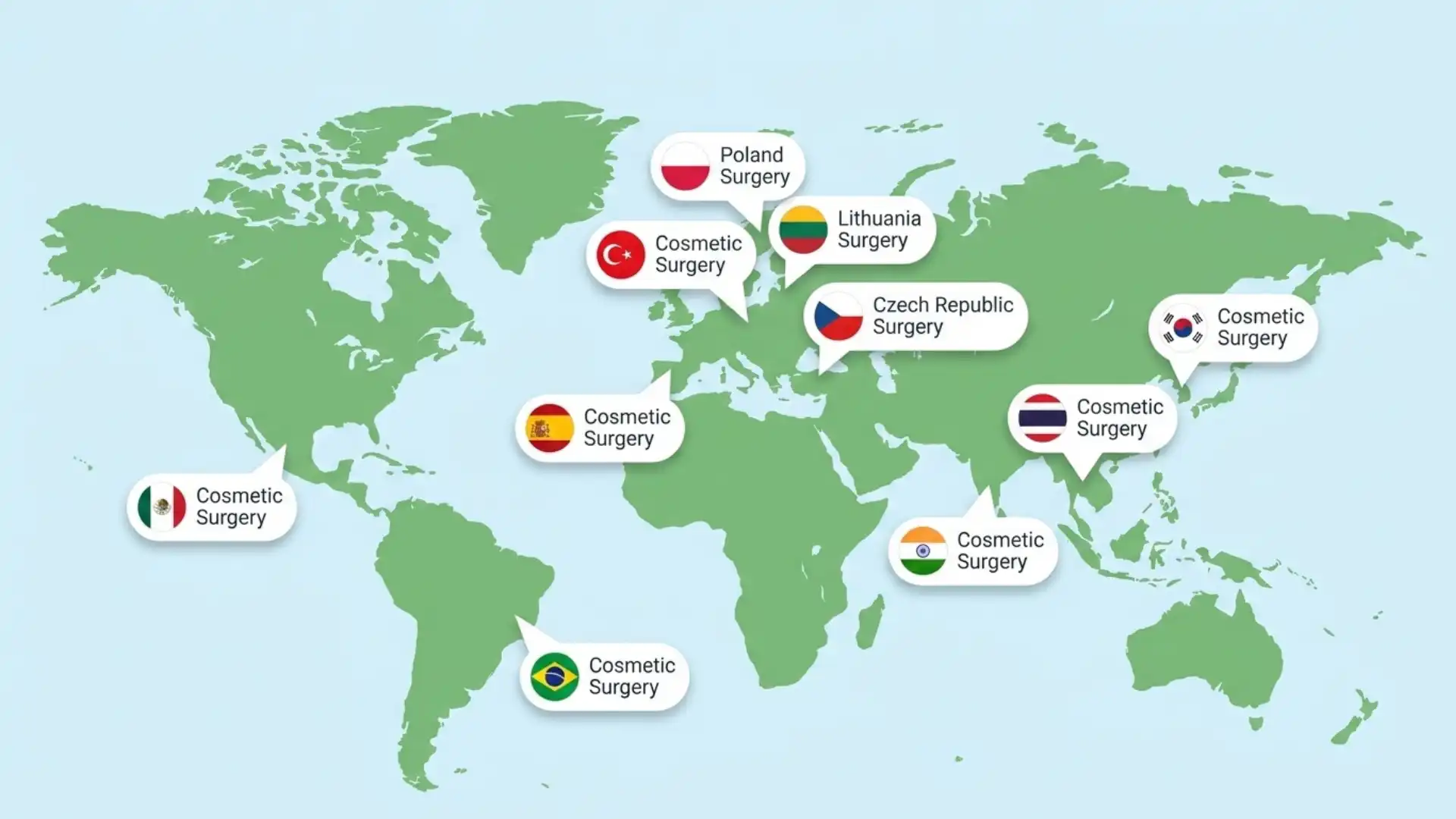
Top destinations for cosmetic surgery abroad — popular places UK patients choose
Cosmetic surgery abroad has become one of the most significant trends in UK healthcare over the past decade. More than half a million people now travel overseas for medical or cosmetic treatment each year — a figure that has more than tripled since 2018, according to data from the Office for National Statistics.
The appeal is straightforward. The same procedure that costs thousands of pounds in the UK can be done for a fraction of the price in Turkey, Poland, or Thailand — often including flights, accommodation, and aftercare in a single package. For many patients, that saving is life-changing. For others, the decision goes badly wrong.
This guide covers the most popular countries for cosmetic surgery tourism among UK patients, the types of procedures most commonly performed in each, and the critical risks that every patient needs to understand before booking anything.
Why UK patients choose cosmetic surgery abroad
The reasons people travel overseas for cosmetic procedures are well understood and largely consistent across surveys and patient communities.
Cost is the dominant factor. Procedures such as rhinoplasty, breast augmentation, and abdominoplasty can cost 40 to 80 per cent less in popular cosmetic surgery tourism destinations than equivalent treatment in a UK private clinic. When travel and accommodation are factored in, patients often still save thousands of pounds even on complex procedures.
Waiting times are another major driver. While cosmetic procedures are not usually available on the NHS, the general culture of long UK waiting lists — and the rising cost of private care domestically — has pushed more patients to explore overseas alternatives. Many international clinics offer consultations and surgery within days of initial contact.
All-inclusive packages have made the logistics far easier than they once were. Most of the established clinics in Turkey, Lithuania, and Poland offer arrangements that include airport transfers, hotel stays, daily check-ups, and a personal coordinator — making the experience more seamless than navigating a UK private system independently.

Turkey: the most popular destination for cosmetic surgery abroad
Turkey — and Istanbul in particular — is the single most popular destination for cosmetic surgery abroad among UK patients. Its dominance is especially pronounced in hair transplants, rhinoplasty, and body contouring procedures, where Turkish clinics have built a global reputation for volume, value, and in many cases, genuine quality.
Hair transplants have become almost synonymous with Istanbul. The city has hundreds of clinics dedicated entirely to the procedure, with all-inclusive packages — flight, hotel, surgery, and aftercare — available at prices that make UK equivalents look extraordinary by comparison. The same is broadly true for rhinoplasty, where Turkey sees extremely high volumes of UK patients each year.
Body contouring procedures — including liposuction, Brazilian butt lifts (BBL), and tummy tucks — are also widely performed, and Istanbul is one of the key global centres for what the industry calls the “mummy makeover”: a combined breast, abdomen, and liposuction package.
Common procedures in Turkey
- Hair transplants — by far the most common, with Istanbul as the global hub
- Rhinoplasty — high volume, significant UK patient base
- Breast augmentation and reduction
- Liposuction and BBL (Brazilian butt lift)
- Tummy tuck (abdominoplasty) and mummy makeover packages
- Dental treatments including veneers and full-mouth reconstruction
The important caveat for Turkey is that its booming cosmetic tourism industry has attracted providers of very uneven quality alongside genuinely skilled and well-equipped clinics. The British Association of Aesthetic Plastic Surgeons (BAAPS) has compiled a database of complications linked to surgery abroad, with cases from Turkey accounting for the overwhelming majority. Choosing a provider in Turkey requires thorough, independent research — not just reliance on social media recommendations or package pricing.
Poland: a trusted choice for quality and value in Eastern Europe
Poland — particularly Wrocław and Warsaw — has established itself as one of the most respected destinations for cosmetic surgery tourism in Europe. It attracts UK patients who want the cost benefits of Eastern Europe without the quality concerns that can arise in some markets.
Polish clinics are known for high standards, internationally trained surgeons, and a strong focus on the UK and Irish market. Several prominent clinics in Wrocław were founded by UK-trained surgeons specifically to serve British patients, and the crossover in professional standards and expectations is significant. Costs are typically 50 to 70 per cent of equivalent UK private prices.
Poland is particularly popular for facelifts, tummy tucks, and breast surgery, as well as rhinoplasty. Patients frequently cite the clear communication, organised care pathways, and proximity — most Polish cities are a two-hour flight from the UK — as advantages over more distant destinations.
Common procedures in Poland
- Facelift and facial rejuvenation surgery
- Breast augmentation, reduction, and lift
- Tummy tuck and body contouring
- Rhinoplasty
- Dental procedures including implants and cosmetic work
Planning cosmetic surgery abroad?
Lower costs can be appealing, but understanding aftercare arrangements, travel risks, and what happens if complications develop once you return to the UK is essential before committing to treatment overseas.
Get expert guidance
Lithuania: a high-volume destination with internationally accredited clinics
Lithuania — and specifically the city of Kaunas — has become one of Europe’s most significant centres for cosmetic surgery tourism. Clinics such as Nordesthetics see thousands of international patients each year, the majority of whom come from the UK and Ireland. The country offers a combination of EU-regulated healthcare standards, high procedural volumes, and prices significantly below Western European rates.
Lithuania is particularly well regarded for tummy tucks, breast surgery, facelifts, and combination procedures. Patients frequently note the modern facilities, English-speaking staff, and the standard of post-operative care as reasons for choosing Lithuanian clinics over Turkish alternatives, despite the lower profile in popular culture.
Thailand: cosmetic surgery tourism with a luxury recovery
Thailand has long been one of the leading destinations for medical tourism globally, and it remains popular with UK patients — particularly those looking to combine cosmetic surgery abroad with a longer period of recovery in a warm climate.
The country is well known for breast augmentation, body contouring, and facial procedures, with many surgeons trained in Western techniques and hospitals that hold international accreditation. Bangkok and Phuket are the main centres, with several hospitals operating at a standard that rivals private facilities in the UK.
The main practical consideration for cosmetic surgery in Thailand is distance. A long-haul flight immediately after surgery carries significantly elevated risks — particularly the risk of deep vein thrombosis (DVT) and pulmonary embolism. Patients need to factor in a substantial period of recovery in Thailand before flying home, which adds considerably to the overall cost. The NHS advises waiting at least five to ten days after most procedures before boarding any flight, and considerably longer after major body surgery.
Common procedures in Thailand
- Breast augmentation and body contouring
- Facial procedures including rhinoplasty and eyelid surgery
- Gender-affirming surgery — Thailand has a global reputation in this area
- Dental treatments
South Korea: the global leader in facial cosmetic surgery
South Korea — particularly Seoul — occupies a unique position in global cosmetic surgery tourism. It is widely regarded as the world leader in facial cosmetic procedures, with a domestic culture of cosmetic surgery that has driven extraordinary levels of expertise and surgical innovation. Procedures such as double eyelid surgery, jaw reduction (v-line surgery), and advanced rhinoplasty techniques are performed at volumes and standards that are difficult to match anywhere else in the world.
South Korea attracts UK patients who are specifically seeking facial work, particularly complex or revisionary procedures where precision and surgical artistry are the primary concerns rather than cost alone. While prices are not as low as Turkey or Eastern Europe, the quality ceiling is exceptionally high.
Common procedures in South Korea
- Double eyelid surgery (blepharoplasty)
- V-line jaw reduction and facial bone contouring
- Rhinoplasty — particularly advanced and revisionary cases
- Skin treatments and non-surgical facial procedures
Brazil and Mexico: body contouring specialists in the Americas
Brazil has one of the highest rates of cosmetic surgery per capita in the world, and it has built a global reputation for body contouring — particularly liposuction, BBL, and tummy tucks. Brazilian plastic surgeons are internationally respected, and São Paulo and Rio de Janeiro attract patients from across the world.
For UK patients, the primary barrier is distance. Brazil is a long-haul destination, and the combination of major body surgery with a transatlantic return flight demands a careful approach to recovery planning. The cost savings can be substantial, but they need to be weighed against the extended recovery time required before it is safe to fly home.
Mexico — particularly in cities such as Monterrey, Guadalajara, and the border city of Tijuana — offers a significant volume of cosmetic surgery tourism, primarily serving North American patients but with a growing UK profile. Prices are low, and the standard of care varies widely. Careful independent verification of both the surgeon and the clinic’s accreditation is essential.
Czech Republic and Spain: European alternatives with strong reputations
Prague has established itself as a respected destination for cosmetic surgery tourism within Europe. The Czech Republic offers high standards of care, internationally trained surgeons, and prices 30 to 40 per cent below Western European equivalents. It is particularly popular for rhinoplasty, breast surgery, and tummy tucks, and appeals to patients who want EU healthcare standards alongside the cost benefits of Eastern Europe.
Spain — especially Barcelona and the Costa del Sol — is popular for patients who want to combine cosmetic surgery abroad with a Mediterranean climate during recovery. Standards are generally high, and the country is well regarded for rhinoplasty and facial procedures. Costs are closer to UK prices than in Eastern Europe, but the quality and regulatory environment are dependable.
The real risks of cosmetic surgery abroad that patients must understand
No destination for cosmetic surgery abroad is risk-free, and understanding the specific risks of travelling overseas for procedures is as important as understanding the costs and the outcomes.
Aftercare and follow-up
One of the most significant practical challenges of cosmetic surgery abroad is what happens when you come home. Most UK patients return within a week or two of their procedure, often before healing is complete. If complications arise after your return — infection, wound breakdown, unexpected swelling, or concerns about the result — your UK GP may have limited experience with the specific procedure, and your overseas surgeon is a phone call rather than a short drive away.
Some complications require prompt professional assessment. Knowing the warning signs, having a clear aftercare plan, and understanding who to contact in the UK if something goes wrong are all essential steps before you travel. Many patients who have experienced problems after cosmetic surgery abroad have found the guide on what evidence to gather for a cosmetic surgery claim useful for understanding what to document from the outset.
Flying home after surgery
The timing of your return flight is one of the most important safety considerations for any patient having cosmetic surgery abroad. Flying too soon after surgery significantly elevates the risk of deep vein thrombosis, pulmonary embolism, wound infection, and swelling-related complications. The NHS recommends waiting five to seven days after breast surgery or liposuction before any flight, and seven to ten days after tummy tucks or facial procedures before short-haul travel — with long-haul flights requiring considerably longer. The full detail on why this matters and how to manage the risk is covered in our guide to flying after cosmetic surgery.
Regulatory standards
Healthcare regulation varies enormously between cosmetic surgery tourism destinations. In EU countries such as Poland, Lithuania, and the Czech Republic, medical standards are subject to EU regulatory frameworks, which provides a meaningful baseline of oversight. In Turkey, Thailand, and destinations outside the EU, standards vary significantly between providers and are not always easy to verify independently.
International accreditation — such as Joint Commission International (JCI) accreditation — is a useful indicator of quality, but it is not universal even among reputable clinics. Always verify the surgeon’s qualifications independently, check that the hospital or clinic holds relevant accreditation, and seek out patient reviews from sources independent of the clinic itself.
Insurance
Standard travel insurance does not cover complications arising from planned cosmetic surgery abroad. Specialist medical travel insurance is available but must be arranged before you travel. If you do not have the right insurance in place and something goes wrong, the cost of emergency care, extended recovery stays, and repatriation can be substantial.
What to check before choosing a clinic abroad
Regardless of which country you are considering, the same due diligence applies. Before committing to any clinic or surgeon for cosmetic surgery abroad:
- Verify the surgeon’s qualifications and registration independently — not through the clinic’s own marketing
- Check that the facility holds international accreditation from a recognised body
- Have at least two consultations with the actual operating surgeon — not a sales coordinator
- Get a detailed written breakdown of exactly what is and is not included in the price
- Understand the full aftercare plan, including what happens if you develop complications after returning to the UK
- Arrange specialist medical travel insurance before you book anything
- Plan your return flight around the medically appropriate waiting time for your specific procedure
The most regrettable cosmetic tourism cases share a common thread: patients who felt reassured by low prices and polished marketing without doing adequate independent verification. A well-established, accredited clinic with strong independent reviews and a transparent aftercare plan costs more than the cheapest package — but the difference in safety and outcome is significant.
When cosmetic surgery abroad goes wrong
When cosmetic surgery risks abroad become a reality, the consequences can be serious — physically, emotionally, and financially. Poor outcomes, surgical errors, inadequate aftercare, and complications that were not properly explained in advance can all form the basis of a legal claim, even when the procedure was performed overseas.
UK patients who have experienced problems following rhinoplasty, breast surgery, or other procedures abroad have legal rights. For patients who have had rhinoplasty that resulted in complications or a significantly different outcome than was agreed, understanding rhinoplasty negligence claims is a practical first step.
Similarly, patients who have suffered complications following breast surgery — whether performed in the UK or abroad — may have grounds for a claim. The process for breast surgery compensation follows the same principles whether the original surgery took place in a UK clinic or an overseas hospital.
The critical factor in any claim is whether the care provided fell below the standard that a competent surgeon would reasonably have delivered — and whether that shortfall caused the harm experienced. This assessment does not depend on where the surgery took place.
For official guidance on the specific questions to ask and checks to carry out before travelling for any overseas procedure, the NHS advice on cosmetic surgery abroad provides a practical and detailed checklist.
Final thoughts
Cosmetic surgery abroad can be a genuinely positive experience — but only when it is approached with full information, realistic expectations, and a clear understanding of both the clinical and logistical risks involved. The countries covered in this guide all have providers capable of delivering excellent outcomes. They also all have providers who should be avoided.
The difference between a good result and a serious complication is rarely about which country you choose. It is about how carefully you choose the specific surgeon and clinic, how thoroughly you understand the procedure and its recovery, and how well prepared you are for the journey home and the weeks of healing that follow.
If you are researching cosmetic surgery tourism, do not let a compelling price override the due diligence steps that protect your health and your legal position. The savings are real — but so are the risks.
Had complications after cosmetic surgery abroad?
If your procedure overseas resulted in unexpected complications, inadequate aftercare, or an outcome significantly different from what was agreed, you may still have legal
options. Our specialist team can review what happened and explain whether you could be entitled to cosmetic surgery compensation.