

Step-by-step guide to making a cosmetic surgery claim in the UK
Making a cosmetic surgery claim can feel daunting, especially when you’re still dealing with the physical and emotional impact of a procedure that went wrong. The good news is that the process is far more straightforward than most people realise — and with the right support, you can pursue the compensation you deserve without added stress or confusion.
This guide walks you through every stage of a cosmetic surgery claim in the UK, from checking whether you have a valid case all the way through to settlement. Whether your concerns relate to breast surgery, rhinoplasty, dental treatment or another procedure, the same core principles apply.
What is a cosmetic surgery claim?
A cosmetic surgery claim is a type of legal action taken when a practitioner has delivered care that falls below an acceptable standard, causing you harm or loss. This is commonly known as cosmetic surgery negligence, and it gives affected patients the right to seek financial redress.
Negligence can take many forms. It might mean a surgeon used poor technique, failed to obtain your informed consent, provided inadequate aftercare, or did not properly explain the risks involved. It can also arise from infections caused by unhygienic conditions, damage to surrounding tissue, or results that are significantly worse than what any competent practitioner would deliver.
The key question in any cosmetic surgery claim is whether the standard of care you received was acceptable. If it was not, and that failure directly caused your injury or loss, you may have a valid claim.
Do you have grounds for a cosmetic surgery negligence claim?
Before any claim can proceed, three things generally need to be established:
- A duty of care existed — the practitioner was responsible for your treatment.
- That duty was breached — the standard of care fell below what was reasonable.
- The breach caused your harm — the negligence directly led to your injury, pain, financial loss or psychological distress.
You do not need to prove that the outcome was simply disappointing. Cosmetic procedures carry inherent risks, and a poor result alone does not always constitute negligence. What matters is whether your practitioner acted as a competent professional would have in the same situation.
Common examples that may support a cosmetic surgery negligence claim include:
- Surgical errors, such as operating on the wrong area or leaving foreign objects in the body
- Failure to disclose known risks before you consented to treatment
- Post-operative infections linked to poor hygiene or inadequate monitoring
- Nerve damage or significant scarring caused by poor technique
- Results that fall far below any acceptable standard of cosmetic care
If you are unsure whether your experience qualifies, speaking with a specialist team is the easiest way to find out. Our frequently asked questions about cosmetic surgery claims cover many of the most common concerns patients have before getting in touch.
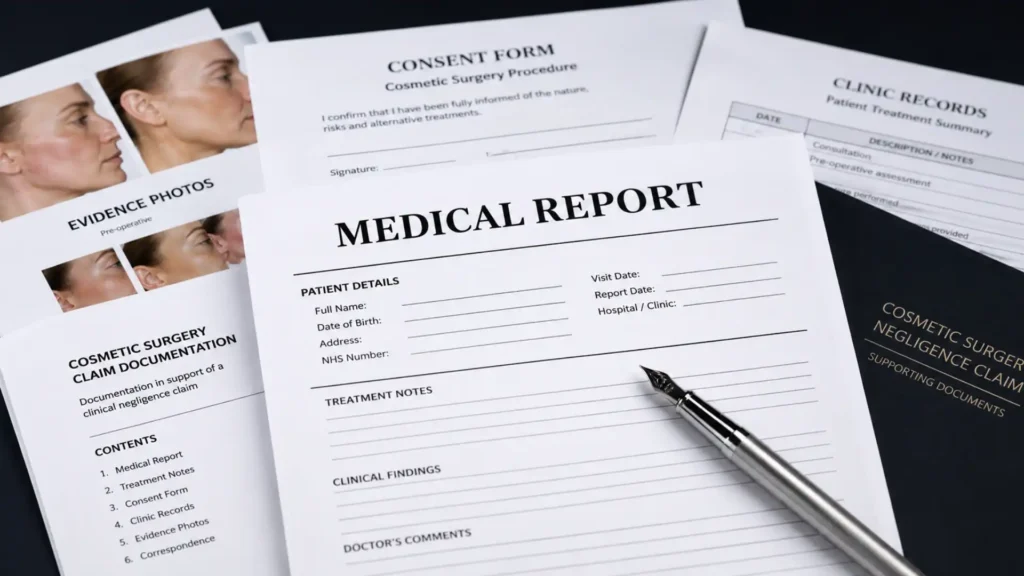
Step 1: Assess your situation and gather initial evidence
The first practical step in any cosmetic surgery claim is to take stock of what happened and begin collecting evidence. Do this as soon as possible, because memories fade and documentation becomes harder to obtain with time.
What evidence is useful at this stage?
You do not need a full legal case file to begin — just start gathering what you have:
- Written notes about what went wrong, when you first noticed it, and how it has affected your daily life
- Photographs of the affected area, ideally taken at regular intervals
- Any written communications with your clinic, including emails, letters, or discharge notes
- Receipts for treatment costs, corrective procedures, or travel related to your care
- Appointment records, consent forms, and any aftercare instructions you were given
This early documentation can be invaluable. It helps build a clear picture of the timeline and demonstrates how your life has been affected by the cosmetic surgery negligence.
Step 2: Speak to a specialist and check your eligibility
Once you have a clearer picture of what happened, the next step is to discuss your situation with a team that specialises in cosmetic surgery compensation. Many firms offer a free initial consultation, and this is a no-obligation opportunity to understand whether your case is worth pursuing.
During this stage, a specialist will typically review:
- The nature of your procedure and the practitioner who carried it out
- What went wrong and when you first became aware of the problem
- The evidence you have gathered so far
- The impact the situation has had on your health, finances and wellbeing
It is important to act within the time limits that apply in the UK. In most cases, you have three years from the date of the negligent procedure — or from the date you first became aware that something had gone wrong — to make a cosmetic surgery claim. Missing this window could mean losing your right to compensation entirely, so do not delay in seeking advice.
At Cosmetic Claims, we handle cases involving breast surgery compensation, rhinoplasty, and dental negligence, giving you access to specialists who understand the specific complexities of each procedure type.
Not sure if your claim is valid?
Step 3: Your solicitor gathers expert evidence
If your initial consultation suggests a valid claim, your solicitor will begin building your case in earnest. This stage is one of the most important in the entire cosmetic surgery claim process.
Your legal team will typically take the following steps:
- Request your full medical records from the clinic or practitioner involved.
- Instruct an independent medical expert — usually a qualified cosmetic surgeon or specialist — to review your treatment and provide a professional opinion on whether negligence occurred.
- Assess the impact of the negligence on your physical and psychological health, your ability to work, and any costs you have incurred.
- Compile a formal evidence bundle to support your cosmetic surgery compensation claim.
The independent expert’s report is central to your case. It establishes whether the standard of care you received was acceptable and, if not, how the failure directly led to your injuries or losses. Without this kind of evidence, it is very difficult to succeed in a cosmetic surgery negligence claim.
Understanding this process in more detail can be helpful before you begin. Our guide to how cosmetic surgery claims work sets out each stage clearly, so you know exactly what to expect.
Step 4: Submitting the claim
Once your evidence is in order, your solicitor will formally submit the cosmetic surgery claim to the practitioner or clinic responsible for your treatment — or to their insurer. This submission sets out the details of the negligence and the compensation being sought.
The other side then has a set period to respond. They may:
- Admit liability and make an offer of settlement
- Deny liability and dispute the claim
- Request further information before deciding on their position
If they admit fault, negotiations can begin to agree on the level of cosmetic surgery compensation. Many cases are resolved at this stage without any need to go to court. If liability is denied, your solicitor will continue to build the case and explore every avenue to secure a fair outcome on your behalf.
Step 5: Negotiation and settlement
The majority of cosmetic surgery negligence claims are resolved through negotiation rather than court proceedings. This is generally quicker, less stressful, and still results in fair cosmetic surgery compensation for the patient.
What can you claim compensation for?
The level of compensation in a cosmetic surgery claim will depend on your individual circumstances, but it can cover a wide range of losses:
- Pain, suffering and loss of amenity — the physical and emotional impact of the negligence
- The cost of corrective treatment or additional surgery needed to address the damage
- Loss of earnings if the complications affected your ability to work
- Psychological distress, including anxiety, depression or impact on self-confidence
- Out-of-pocket expenses such as travel costs, prescription charges and private consultations
Your solicitor will work to ensure that all of these heads of loss are properly accounted for when calculating what your cosmetic surgery compensation should be. No two cases are identical, but the goal is always to put you in the position you would have been in had the negligence not occurred.
How long does a cosmetic surgery claim take?
The timeline for a cosmetic surgery claim varies depending on the complexity of the case, how quickly the other side responds, and whether liability is disputed. Straightforward cases where fault is admitted can sometimes be resolved within a matter of months. More complex claims, particularly those involving severe injuries or multiple complications, may take considerably longer.
Working with a specialist team helps to keep things moving efficiently. Your solicitor will manage all correspondence, chase for responses, and advise you on whether any offer of settlement is fair before you make a decision.
The Care Quality Commission (CQC) provides useful information about regulated cosmetic procedures and the standards clinics are required to meet in England — which can be relevant context when assessing your case.
What if your procedure was carried out abroad?
Many people have cosmetic surgery performed overseas, and complications can arise just as they would with UK-based treatment. However, pursuing a cosmetic surgery negligence claim against a foreign clinic or practitioner can be significantly more complex, as different legal frameworks may apply.
If you had a procedure abroad and experienced problems, it is worth speaking to a specialist team as soon as possible. The situation may still be actionable, particularly if the clinic had UK operations or if you paid using a UK payment method.
If your procedure involved rhinoplasty and you are experiencing difficulties, our dedicated rhinoplasty compensation page covers the specific types of issues that commonly arise and how we approach these cases.
Find out if you have a cosmetic surgery negligence claim
If your cosmetic treatment gone wrong has left you with physical harm, emotional distress, or unexpected costs, you may be entitled to medical negligence compensation. Our team handles breast surgery, rhinoplasty, and dental cosmetic claims on a no win, no fee basis — so there is no financial risk in finding out where you stand.