
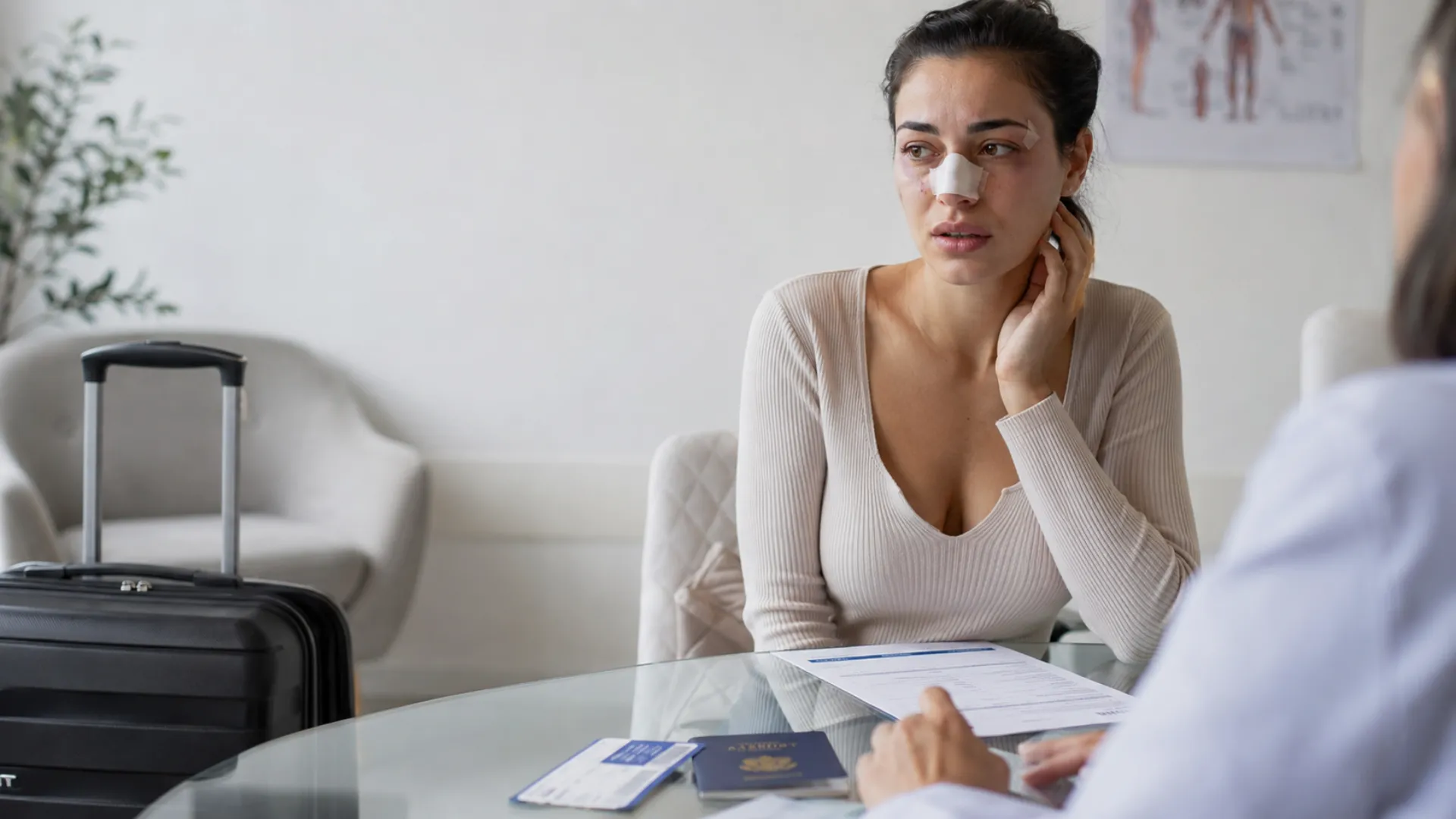
Medical tourism mistakes to avoid: lessons from patients who regretted cosmetic surgery abroad
Cosmetic surgery abroad attracts thousands of UK patients every year. Lower prices, glossy clinic websites, and social media before-and-after photos make the decision feel straightforward. But for a significant number of patients, the reality is far more complicated.
The medical tourism risks that matter most are rarely mentioned upfront. Communication problems, no aftercare plan, and cosmetic surgery complications that have to be corrected privately back in the UK — these are the outcomes that patients say changed how they view the entire decision.
This guide uses anonymised case summaries drawn from patterns reported across the UK healthcare system to explain the most common mistakes, why they happen, and what to consider before booking a procedure overseas.
The scale of regret: what the data shows
Research presented to the British Association of Aesthetic Plastic Surgeons reviewed ten years of patients referred to a UK tertiary plastic surgery unit after experiencing complications from procedures performed overseas. Of those who responded to a follow-up survey, 66% said they would not make the same decision again — and nearly half expressed outright regret.
Price was the primary motivation in 83% of cases. Most patients spent under £5,000 on the entire trip, including surgery, flights, and accommodation. For many, the cost of corrective treatment in the UK far exceeded what they had saved.
The most common cosmetic surgery complications encountered included wound healing problems, fluid accumulation (seroma), and infection — all conditions that require in-person follow-up care, and all conditions that are significantly harder to manage from a distance.
Mistake 1: Choosing a clinic based on social media alone
The most frequently reported starting point for patients who later experienced problems is choosing a clinic based on Instagram results, influencer recommendations, or before-and-after galleries rather than verified clinical credentials.
A clinic’s online presence can be polished and persuasive without reflecting anything meaningful about its safety record. Patient reviews on booking platforms can be curated or incentivised. Before-and-after images can be selectively chosen or manipulated. None of this gives you reliable information about how a surgeon is qualified, whether the facility meets any recognised standard, or what happens if something goes wrong.
In the UK, surgeons who perform invasive procedures must be registered with the General Medical Council and hold appropriate specialist qualifications. Many countries popular for cosmetic surgery abroad have no equivalent public register that patients can independently check before committing.
Anonymised case summary — social media selection
A patient in her late twenties booked a rhinoplasty through a clinic she found via Instagram. The surgeon’s credentials appeared impressive on the clinic’s website. After the procedure, she experienced breathing difficulties and visible asymmetry that worsened over several months. When she tried to contact the clinic, responses became infrequent and unhelpful. A UK surgeon who reviewed her case noted that the original procedure had been performed incorrectly. She underwent corrective rhinoplasty privately in the UK at a cost that exceeded the original surgery several times over.
Mistake 2: Underestimating communication barriers
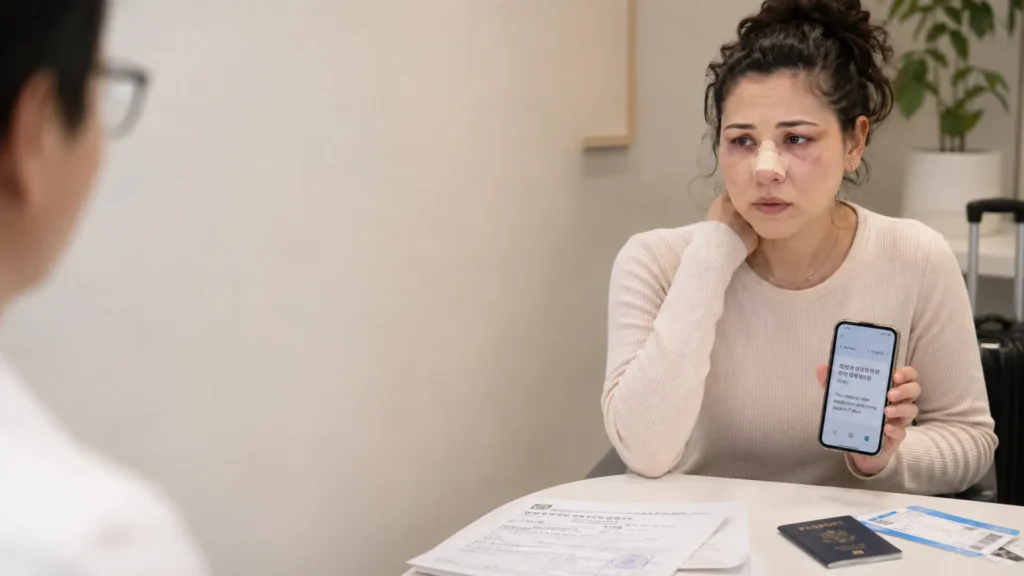
Language is one of the least discussed medical tourism risks — and one of the most consequential. Effective communication between a patient and their clinical team is essential at every stage: during pre-operative consultation, in the immediate post-operative period, and throughout recovery.
Patients who travel to countries where they do not share a language with their surgeon rely heavily on translation — whether from clinic staff, informal translation, or their own limited understanding. Important information about pre-operative preparation, post-operative instructions, and warning signs of cosmetic surgery complications can be lost, misunderstood, or simply not communicated at all.
Written discharge notes, aftercare instructions, and medication details may be provided only in the local language. A patient travelling home within 48 to 72 hours of surgery may be following aftercare guidance they cannot fully understand.
Anonymised case summary — communication failure
A patient who travelled abroad for breast augmentation reported that her pre-operative consultation lasted under fifteen minutes and involved minimal detail about the implants to be used or the risks of the specific procedure. Post-operative instructions were provided as a printed document in a language she did not speak. She was discharged and flew home two days later. Within a week she developed signs of infection. Contacting the clinic remotely resulted in delayed and vague advice. Her GP referred her for emergency private treatment. She later discovered she had not been given information about a contraindicated medication she was already taking.
Did complications from cosmetic surgery abroad leave you needing corrective treatment?
If you have experienced cosmetic surgery complications following a procedure overseas and required further treatment in the UK, you may have grounds for a negligence claim. Cosmetic Claims supports patients who have faced exactly this situation. Our how it works page explains the claims process clearly and honestly. If you are unsure whether you have a case, contact us for a free assessment — there is no obligation and no upfront cost.
Mistake 3: Travelling home too soon after surgery
Flying shortly after a surgical procedure carries specific medical risks that are well documented — most notably an elevated risk of deep vein thrombosis (DVT) and pulmonary embolism. Many patients travelling for cosmetic surgery abroad fly home within 48 to 72 hours of an operation, sometimes less.
This is a particularly serious concern after procedures involving extended operative time, general anaesthesia, or surgery to the lower limbs and abdomen. Immobility during a flight, combined with post-surgical changes to blood coagulation, creates conditions that significantly increase clot risk.
Some clinics advise patients to stay at least seven to ten days after surgery before flying. In practice, the cost of extending a stay — additional accommodation, lost earnings, care for dependants — means many patients do not follow this guidance even when it is given. Others report receiving no clear advice about flying timelines at all.
Anonymised case summary — early travel
A patient who had undergone an abdominoplasty abroad flew home four days after surgery. During the flight she developed severe leg pain. She was admitted to hospital on arrival and treated for deep vein thrombosis. The clinical team noted that the surgical dressings applied abroad were not consistent with standard post-operative practice and had contributed to complications. She required several weeks of inpatient and outpatient treatment before stabilising.
Mistake 4: Having no aftercare plan before you travel
Post-operative care is not a minor detail — it is a core component of safe surgery. For cosmetic surgery abroad, the aftercare plan is often the weakest part of the entire process.
In the UK, a patient who undergoes surgery with a regulated provider has access to a named clinical contact for post-operative concerns, clearly documented follow-up appointments, and a clear escalation pathway if cosmetic surgery complications develop. Most patients can also attend their GP practice, with medical records accessible to any clinician involved.
Patients who undergo cosmetic surgery abroad and return home quickly often have none of these in place. Their GP may be unaware of the procedure. Their medical records from the overseas clinic may be incomplete, written in another language, or not transferred at all. When complications arise, the clinician seeing them in the UK is often working without the information they need.
Healthcare Improvement Scotland has highlighted exactly this gap — noting that limited or no continuity of care, particularly where complications emerge after travel, is one of the defining features of problematic cosmetic tourism cases.

Anonymised case summary — no aftercare plan
A patient returned to the UK after dental veneers fitted abroad. She had not been told what to do if sensitivity or pain developed, and the clinic contact became unresponsive within days. She experienced persistent pain and swelling over two weeks before seeing a UK dentist, who found that two of the veneers had been fitted incorrectly and had damaged the underlying tooth structure. She required extensive corrective dental work. No aftercare documentation had been provided at discharge.
Mistake 5: Assuming travel insurance covers complications
One of the most common and costly medical tourism risks that patients underestimate is the false sense of security provided by standard travel insurance. Most patients assume their policy will act as a safety net if something goes wrong after cosmetic surgery abroad. It will not.
Standard travel insurance is designed to cover unforeseeable accidents and emergencies — not complications arising from a planned elective procedure. This means that if you develop an infection after surgery, experience a wound breakdown, or require emergency corrective treatment, your standard policy is unlikely to respond at all.
Specialist medical tourism insurance exists and provides cover for planned procedures and their complications, but it is expensive, frequently excludes pre-existing conditions, and is rarely taken out by patients who are focused primarily on reducing the overall cost of their trip. Even when it is in place, claiming from a foreign insurer while dealing with the immediate medical and emotional impact of cosmetic surgery complications is far from straightforward.
What happens to your NHS and legal rights when surgery goes abroad?
UK patients who experience problems after cosmetic surgery abroad face a significantly more limited set of options than those who experience issues following UK-based procedures.
The NHS is funded to treat acute emergencies and life-threatening conditions — not to correct the elective results of a procedure chosen and paid for overseas. While hospitals will treat genuine emergencies regardless of cause, patients returning with poor results or non-urgent complications from cosmetic surgery abroad will in most cases need to fund corrective treatment privately.
Legal recourse is similarly constrained. Making a negligence claim against a clinic in another jurisdiction involves navigating a different legal system, different standards of care, different limitation periods, and often language barriers. For most patients, this is practically and financially impossible.
Where UK practitioners have subsequently been involved in diagnosis or corrective treatment, there may be a route to a claim depending on the circumstances. Cosmetic Claims advises on breast surgery compensation, rhinoplasty compensation, and dental surgery compensation for patients across the UK — including in cases where overseas surgery has led to corrective procedures here.
What to check before booking any procedure overseas
None of this means that every procedure performed abroad results in a poor outcome. Qualified, experienced surgeons operate in many countries, and patients who research carefully and plan thoroughly can reduce their risk significantly. The problem is that the shortcuts that make cosmetic surgery abroad seem attractive — low price, quick booking, short stay — are also the factors that make complications more likely.
Before committing to any procedure overseas, a realistic checklist should include:
- Verifying the surgeon’s qualifications against a publicly accessible national register — not just their clinic profile.
- Confirming what happens if complications arise — who you contact, what the clinic’s protocol is, and whether remote aftercare is genuinely structured.
- Understanding the full cost including the realistic cost of corrective treatment in the UK if something goes wrong — not just the headline price.
- Arranging specialist medical tourism insurance before travel, not as an afterthought.
- Planning your return travel carefully — confirm how long you should stay before flying and follow that advice, accounting for your specific procedure.
Informing your UK GP in advance so they have your pre-operative health record and are prepared to support you on return. The Care Quality Commission (CQC) is the independent regulator of health and social care in England. UK patients can use the CQC register to verify whether a cosmetic provider is regulated before booking any procedure.
Experienced complications after cosmetic surgery abroad? You may still have options
If cosmetic surgery abroad resulted in complications that required corrective treatment in the UK, a negligence claim may still be possible — even where the original surgery took place overseas. The specific circumstances matter, and specialist advice is the right starting point.
Cosmetic Claims handles cases involving failed or negligent procedures on a No Win, No Fee basis. We will assess your situation honestly and tell you clearly whether we believe a claim is viable — with no pressure and no upfront cost.