

Can I get insurance or refunds for cosmetic surgery abroad? What you need to check first
Insurance for cosmetic surgery abroad is something most patients only think about after a procedure has gone wrong, by which point it’s usually too late. Lower prices and shorter waiting lists make overseas treatment tempting, but very few patients ask the right questions about cover before they book, leaving them exposed if a complication arises or a clinic simply won’t refund their money.
This article explains what standard travel insurance will and won’t cover, how medical indemnity insurance works for overseas clinics, and what to check about refunds for cosmetic surgery abroad before you commit to a procedure.
Why insurance and refunds matter when you have surgery abroad
Cosmetic surgery, like any medical procedure, carries risk. In the UK, a mix of regulation, professional indemnity requirements and consumer protection law gives patients several layers of protection if something goes wrong. Once you travel abroad, many of those protections simply don’t apply.
Understanding insurance for cosmetic surgery abroad matters because it determines who pays if you need corrective treatment, extended accommodation, or an earlier-than-planned flight home. Without the right cover, patients can be left facing thousands of pounds in unplanned costs on top of a disappointing or dangerous result.
Does travel insurance cover cosmetic surgery abroad?
For most patients, the short answer is no. Standard travel insurance policies are built around unexpected illness, accidents and trip disruption, not planned medical procedures.
Common travel insurance exclusions
Travel insurance exclusions typically rule out cover for anything related to a pre-arranged treatment. That means if you develop a complication from your surgery, need additional treatment, or have to extend your stay because of the procedure itself, your ordinary travel insurance is unlikely to pay out. These travel insurance exclusions catch out a surprising number of patients who assume a standard annual policy will protect them the same way it would on a normal holiday.
It’s worth reading the policy wording closely. Many travel insurance exclusions specifically list “cosmetic surgery,” “elective treatment” or “medical tourism” as excluded activities, regardless of where the procedure takes place.
Specialist medical travel insurance abroad
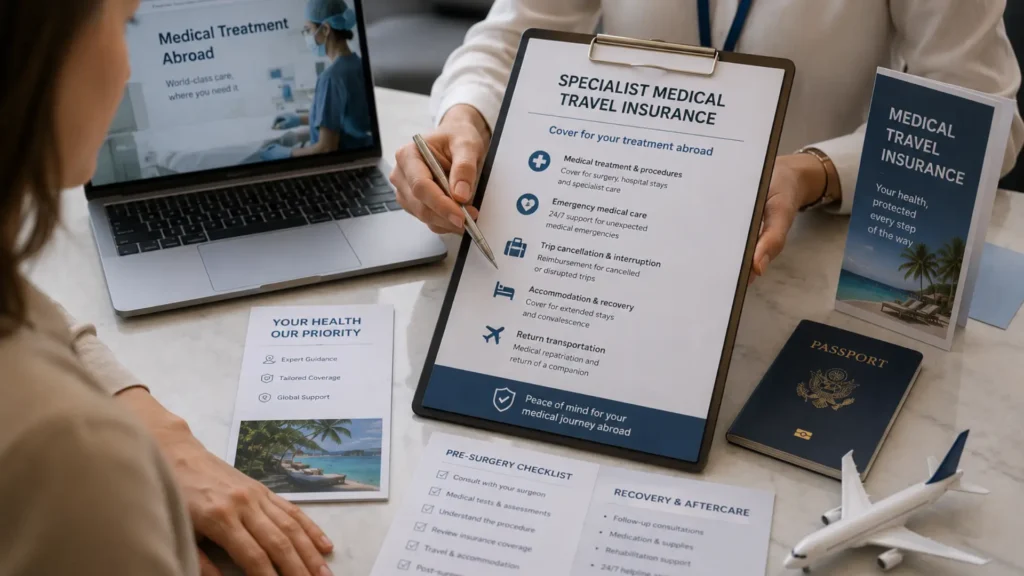
Because of these travel insurance exclusions, a small number of insurers offer specialist policies designed specifically for patients travelling for treatment. These policies can include cover for medical and repatriation costs if a complication occurs, additional accommodation if you need to stay longer to recover, and in some cases, cover if you need to return to the original clinic within a set period after coming home. This type of policy is separate from, and in addition to, ordinary travel insurance, and it’s worth arranging before you fly rather than assuming your usual provider will extend cover.
Not sure if your travel insurance would have covered you?
If you’ve already had treatment abroad and you’re unsure whether your policy should have paid out, or whether the clinic itself was properly insured, it’s worth getting a clear answer rather than guessing. Speaking with our team about your situation can help you understand where you stand.
What is medical indemnity insurance, and does the clinic have it?
Medical indemnity insurance is separate from your own travel cover. It’s the insurance a surgeon or clinic holds to cover claims made against them if their treatment causes harm through negligence. In the UK, this is a standard requirement for anyone practising medicine, but standards vary significantly overseas.
Before booking, ask the clinic directly what medical indemnity insurance they hold, whether it covers the specific procedure you’re having, and whether it would pay out to a UK patient making a claim from abroad. A reputable clinic should be able to answer these questions clearly. Vague answers, or a refusal to provide details, is a warning sign worth taking seriously, and it’s a good reason to treat their claims about insurance for cosmetic surgery abroad with caution.
Clinic refund policies: what to check before you book
Refunds for cosmetic surgery abroad are rarely straightforward, and clinic policies vary enormously. Some offer generous guarantees, while others make refunds practically impossible to claim once you’ve paid a deposit.
Cancellation and change-of-mind refunds
Ask what happens if you change your mind before surgery, whether that’s due to nerves, a change in circumstances, or a second opinion that gives you pause. Some clinics offer a cooling-off period with a full refund; others keep some or all of your deposit once it’s paid. Get this in writing before you transfer any money.
Refunds if the procedure was not performed to standard
If your results don’t match what was agreed, or a procedure goes wrong altogether, ask what the clinic’s own refund or revision policy looks like. Many overseas clinics offer a “free revision,” but this promise is only useful if you can realistically travel back to use it. Refunds for cosmetic surgery abroad are rarely paid out automatically. In most cases, the patient has to formally request one, provide evidence, and sometimes negotiate, all while dealing with the practical difficulty of pursuing a claim against a business in another country.
It’s sensible to assume that a verbal promise of “we’ll sort it if there’s a problem” won’t hold much weight later. Ask for the clinic’s refund and complaints policy in writing, and keep a copy for your own records.
A quick checklist before you book
Before you pay a deposit, it’s worth working through a short list of questions covering both insurance for cosmetic surgery abroad and refunds for cosmetic surgery abroad:
- Does your travel insurance policy explicitly cover planned medical treatment, or does it sit among the standard travel insurance exclusions?
- Have you looked into a specialist medical travel insurance policy designed for cosmetic procedures abroad?
- What medical indemnity insurance does the clinic hold, and does it extend to UK patients?
- What is the clinic’s written cancellation and change-of-mind refund policy?
- What is the clinic’s written policy on refunds for cosmetic surgery abroad if the results don’t meet what was agreed?
- Who, specifically, is your named point of contact if something goes wrong after you return home?
Getting clear, written answers to each of these before you travel puts you in a far stronger position than relying on verbal reassurances once you’re already at the clinic.
What to do if you weren’t covered and something went wrong
If you’ve already had a procedure abroad and discovered too late that your travel insurance didn’t cover the complication, the clinic’s medical indemnity insurance was inadequate, or the promised refund never materialised, you may still have options. Depending on the circumstances, you could have grounds for a cosmetic surgery compensation claim, particularly if the clinic’s own failures, such as inadequate consent or substandard care, contributed to your outcome.
This applies whether your treatment involved a breast procedure that didn’t go to plan, a rhinoplasty result that fell short of what was agreed, or dental work carried out abroad. Reviewing how our claims process works is a useful next step if you’re weighing up whether to pursue a claim.
For an independent overview of the wider risks involved in travelling for treatment, the Royal College of Surgeons guidance on cosmetic surgery abroad sets out further questions worth asking before you book.
Ready to find out where you stand?
If you weren’t properly covered by insurance for cosmetic surgery abroad, or a clinic hasn’t honoured its refund promises, our team can review your case and explain your options in plain English, with no obligation.