
Common rhinoplasty complications
Rhinoplasty, often referred to as a “nose job”, is one of the most popular forms of cosmetic surgery in the UK. It can reshape the nose, improve facial balance and, in some cases, enhance breathing.
While many patients achieve their desired results, it is important to understand that rhinoplasty is still a surgical procedure — and like all surgery, it carries risks. If you are researching plastic surgery, being informed about common rhinoplasty complications will help you make a confident and well-considered decision.
Below, we explain the most common rhinoplasty complications, what causes them, and when revision surgery may be required.
Breathing Problems After Rhinoplasty
One of the most significant rhinoplasty complications is difficulty breathing through the nose.
Although many patients undergo rhinoplasty to improve breathing (particularly if combined with septoplasty), some experience new or ongoing nasal obstruction after surgery. Studies suggest:
• Around 5–10% of patients may not notice improvement in breathing.
• A small percentage may feel their breathing has worsened.
• Breathing concerns are one of the main reasons patients seek revision rhinoplasty.
Breathing problems can occur due to:
• Residual septal deviation (a crooked septum not fully corrected)
• Nasal valve collapse
• Over-reduction of cartilage
• Internal scarring
• Narrowing of the nasal airway during reshaping
In some cases, patients report a “blocked nose” sensation even when the airway appears open. This may be linked to reduced mucosal sensitivity caused by surgical scarring.
If breathing issues persist, further assessment and potentially revision surgery may be required.
Bleeding and Nosebleeds
Minor bleeding and blood-tinged discharge are common for several days after rhinoplasty. However, excessive bleeding is a recognised complication.
Severe nosebleeds occur in approximately 1–2% of patients and usually develop within the first 24–72 hours after surgery.
Risk factors include:
• Use of blood-thinning medication
• Alcohol consumption before surgery
• Underlying bleeding disorders
• Certain supplements
While most cases resolve with conservative management, significant bleeding may require nasal packing or cauterisation.
Infection
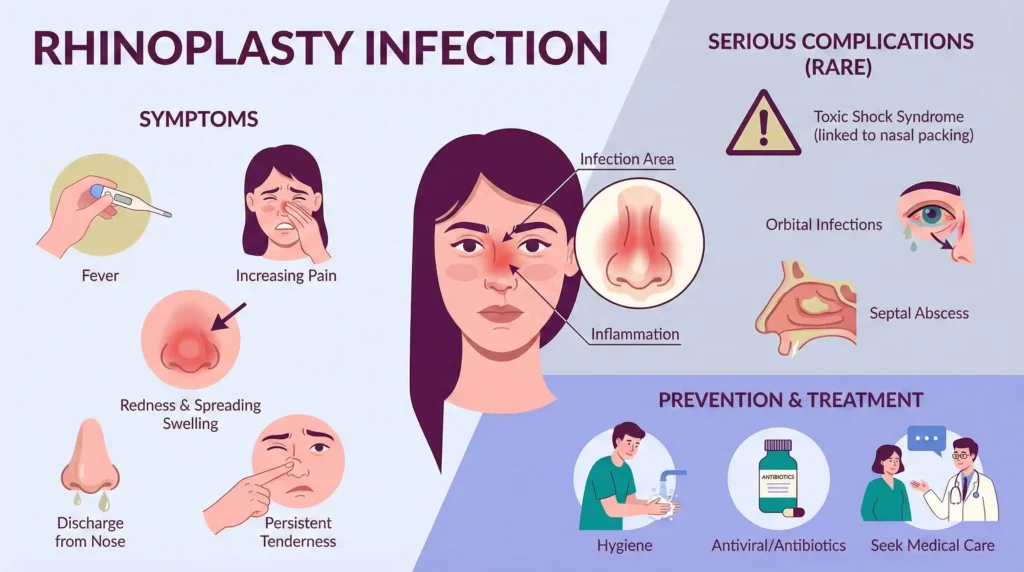
Infection following rhinoplasty is uncommon, occurring in less than 1% of cases. However, when it does occur, it can be serious.
Symptoms of infection may include:
• Increasing pain
• Fever
• Redness or spreading swelling
• Discharge from the nose
• Persistent tenderness
Rare but severe complications reported in medical literature include:
• Toxic shock syndrome (linked to nasal packing)
• Orbital infections affecting the eye
• Septal abscess
Prompt medical treatment is essential to prevent long-term damage.
Septal Perforation
A septal perforation is a hole in the nasal septum (the wall dividing the nostrils). This occurs in approximately 1% of patients.
It may develop weeks or months after surgery and can cause:
• Whistling when breathing
• Crusting
• Bleeding
• Discomfort
Patients with previous nasal surgery, trauma, or a history of intranasal drug use may be at increased risk. Some perforations require surgical repair.
Swelling, Bruising and Skin Complications
Swelling and bruising are expected after rhinoplasty. Most visible bruising resolves within two to three weeks, but internal swelling can last months — sometimes up to a year.
Less common skin and soft tissue complications include:
• Prolonged redness or skin discolouration
• Visible blood vessels
• Numbness of the nasal tip
• Scar irregularities (particularly in open rhinoplasty)
• Skin atrophy or thinning
Noticeable scarring at the columella (the strip of skin between the nostrils) occurs in a small percentage of patients, typically between 1–4%.
Most numbness improves within 12 months, though in rare cases it may persist.
Changes in Sense of Smell or Taste
Temporary changes in smell and taste are common due to swelling and internal packing.
Permanent loss of smell (anosmia) is rare, occurring in less than 0.5% of cases. However, some patients report altered sensation lasting several months.
Concerned about complications after rhinoplasty?
If you’ve experienced breathing problems, asymmetry, infection, nerve damage, or unexpected results after nose surgery, you may be entitled to compensation. Our specialist cosmetic surgery solicitors can assess your situation and explain your options clearly and confidentially.
Implant and Graft Complications
In some rhinoplasty procedures, cartilage grafts (from the septum, ear or rib) or synthetic implants are used to reshape or augment the nose.
Potential complications include:
• Infection
• Graft resorption (breakdown)
• Warping or distortion
• Implant extrusion (implant pushing through the skin)
Silicone implants have reported complication rates ranging from 5–20%, whereas materials such as Gore-Tex show lower removal rates in some studies.
Autologous cartilage (using the patient’s own tissue) is generally considered the safest option, though it is not risk-free.
Postoperative Deformities
One of the most common reasons for dissatisfaction after rhinoplasty is cosmetic deformity.
Revision rates after primary rhinoplasty range from 5% to 15%, depending on complexity.
Common postoperative deformities include:
• Pollybeak deformity (a rounded fullness above the nasal tip)
• Over-resection (saddle nose deformity)
• Irregularities along the nasal bridge
• Wide or asymmetrical nasal tip
• Drooping tip
• Alar collapse
• Visible asymmetry
The pollybeak deformity alone accounts for a significant portion of revision rhinoplasty procedures.
Many of these complications are linked to loss of septal support or over-aggressive cartilage removal. Healing dynamics also play a major role — the nose can look different one year after surgery compared to immediately post-operation.
Psychological and Emotional Impact
Rhinoplasty complications are not always physical.
Some patients experience:
• Disappointment with cosmetic outcome
• Anxiety about appearance
• Emotional distress
• Body dysmorphic concerns
Expectation management is critical. A technically successful rhinoplasty can still result in dissatisfaction if expectations were unrealistic.
Proper patient assessment and clear communication with the surgeon significantly reduce this risk.
The Need for Revision Rhinoplasty
Revision rhinoplasty is more complex than primary surgery and carries additional risks due to scar tissue and altered anatomy.
Reasons for revision may include:
• Breathing difficulties
• Cosmetic dissatisfaction
• Structural instability
• Infection or graft issues
Revision rates increase in patients who:
• Have had previous nasal surgery
• Experienced trauma
• Had untreated septal deviation
• Developed postoperative complications
Patients are usually advised to wait at least 12 months before undergoing revision surgery, as the nose continues to change during healing.
Reducing the Risk of Rhinoplasty Complications
While no surgical procedure is risk-free, you can reduce your risk of rhinoplasty complications by:
• Choosing a qualified, experienced surgeon
• Ensuring surgery is performed in an accredited facility
• Discussing both functional and cosmetic goals clearly
• Stopping smoking before surgery
• Avoiding blood-thinning medication (under medical supervision)
• Following all post-operative instructions carefully
Understanding the complexity of rhinoplasty is important. Even small structural adjustments can have significant functional and aesthetic consequences.
Considering Rhinoplasty? Know the Risks Before You Decide
Rhinoplasty can deliver life-changing results — improving confidence, facial harmony and breathing function. However, it is a complex surgical procedure with recognised risks.
If you are researching common rhinoplasty complications, ensure you seek advice from an appropriately qualified plastic surgeon and ask detailed questions about:
• Complication rates
• Revision rates
• Your personal risk factors
• Expected recovery timeline
• Functional impact on breathing
Being fully informed allows you to make a safe and confident decision about cosmetic surgery.
If you believe you have experienced complications following rhinoplasty or are considering your legal options, seeking specialist advice may also be appropriate.
Understanding both the benefits and the risks of rhinoplasty is the first step toward achieving the outcome you truly want.
Experienced complications after rhinoplasty?
Rhinoplasty should improve both appearance and function — not leave you dealing with avoidable complications. If your procedure resulted in poor cosmetic outcomes, breathing difficulties, infection, or the need for corrective surgery, our legal team can help you understand whether medical negligence may be involved.
We provide clear, supportive advice and handle claims with discretion and sensitivity from start to resolution.