
Is it safe to get cosmetic surgery abroad? What UK patients need to know
More UK patients than ever are booking cosmetic surgery abroad, drawn in by prices that can be half what they would pay at home. But is it actually safe, and what happens if something goes wrong once you are back on UK soil? This guide walks through why so many people choose cosmetic surgery abroad, the risks worth knowing before you book a cosmetic tourism package, and what your options are if a procedure leaves you with complications.
Why so many UK patients choose cosmetic surgery abroad
The biggest draw is cost. A breast augmentation, rhinoplasty or full set of dental veneers can cost a fraction of the UK price in countries such as Turkey, Poland or Hungary. Clinics often bundle in flights, hotels and airport transfers, which makes cosmetic surgery abroad feel like a straightforward package holiday rather than a medical procedure.
Social media plays a huge part too. Before-and-after photos, glowing reviews and influencer partnerships make cosmetic tourism look simple, glamorous and low-risk. Long NHS and private waiting lists in the UK also push some patients to look overseas for a faster appointment and a shorter wait for the results they want.
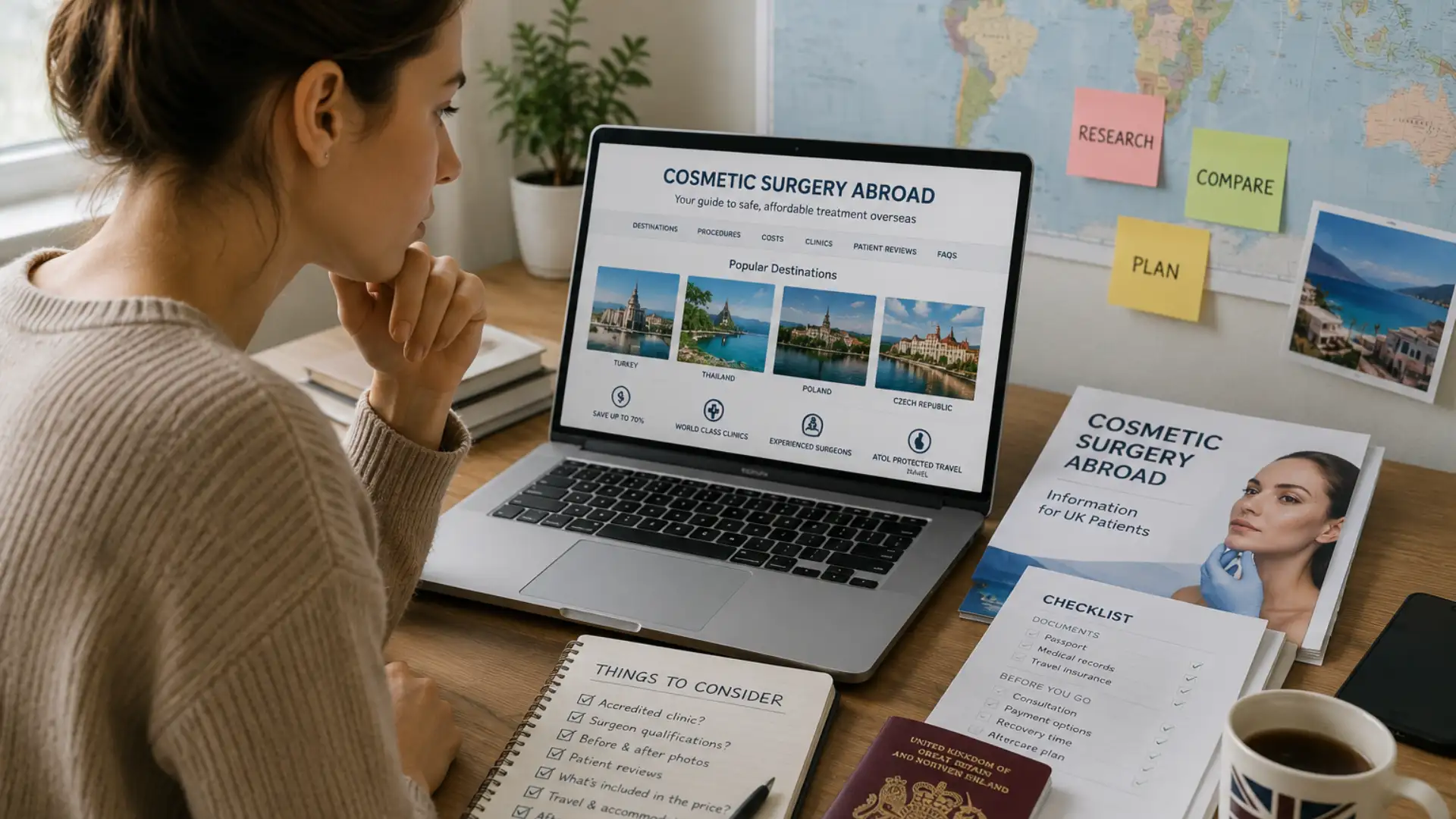
Turkey remains the most searched destination for both surgical procedures and dental work, but plenty of other countries now compete for UK patients chasing a cosmetic tourism deal. See the popular destinations UK patients choose. Understanding why a destination is popular is not the same as understanding whether it is safe.
The real risks of cosmetic surgery abroad
Every operation carries some risk, whether it happens in Manchester or Marmaris. What changes with cosmetic surgery abroad is how much control you have over who treats you, how the clinic is regulated, and what support is available if things do not go to plan.
Variable safety standards and regulation
Regulation of cosmetic surgery abroad varies enormously from country to country. A clinic that looks polished online is not necessarily held to the same standards as a hospital in the UK. Before booking any cosmetic tourism trip, it is worth checking:
- how surgeons and clinics are regulated in that country
- what qualifications and specialist training the surgeon actually holds
- how many times they have performed your specific procedure
- whether the facility has proper infection control and emergency equipment on site
Cosmetic tourism packages rarely make this information easy to find, and sales agents are not medical professionals, so their reassurances are not a substitute for real checks on the surgeon and the hospital.
Communication and language barriers
Explaining exactly what you want, and understanding the risks involved, depends on clear communication with the surgeon who will actually operate on you. When a language barrier gets in the way, consent forms can be signed without full understanding, and follow-up questions can go unanswered. Read more about language barriers in cosmetic surgery abroad. This is one of the quieter risks of cosmetic tourism, but it can shape your entire experience from consultation through to recovery.
Limited or no aftercare
Aftercare is where cosmetic surgery abroad often falls short. Many overseas clinics have no representative in the UK, so if you develop an infection, an implant problem or a wound that will not heal, there is nobody nearby to check on you. Travel insurance rarely covers complications from planned cosmetic procedures, and clinics can be vague about what their own aftercare package actually includes. Check what to look for in our guide to insurance and refunds for cosmetic surgery abroad.
Not sure if what happened to you counts as negligence?
If your results were painful, unsafe or nothing like what you were promised, it is worth talking to someone who understands cosmetic surgery claims. Our team can help you work out whether negligence played a part, even if your procedure took place overseas — speak to our team. There is no pressure and no obligation, just honest guidance about your cosmetic surgery claim.
What happens if you have complications after cosmetic surgery abroad
Complications after cosmetic surgery abroad range from infections and poor scarring to implant rupture, nerve damage or breathing problems following a botched rhinoplasty. Dental work such as veneers and implants can fail, become painful or need to be redone entirely, often at a much higher cost than the original cosmetic tourism package.
When these problems appear, patients are often faced with a difficult choice: fly back to the original clinic for a free revision, or find and pay for corrective treatment in the UK. Neither option is simple once you are dealing with pain, swelling or an infection, and every delay can make a straightforward cosmetic surgery claim harder to support with clear evidence.
How complications land back in the UK healthcare system
This is where cosmetic surgery abroad creates a knock-on problem few patients expect. The NHS will generally only step in for life-threatening emergencies, not for ongoing correction of a cosmetic result you are unhappy with. Everyday follow-up, wound checks and revision surgery usually fall to you to arrange and pay for privately.
Flight timing matters here too. Flying too soon after any operation raises the risk of blood clots, and returning home with an untreated infection or open wound can make things considerably worse. Learn more about flying after cosmetic surgery. Patients who travelled abroad for a bargain price can end up spending far more on corrective treatment back in the UK than they saved on their original cosmetic tourism trip.
How to reduce the risk if you are still considering surgery abroad
If you are set on going ahead with cosmetic surgery abroad, a bit of groundwork can make a genuine difference to your safety:
- Insist on a proper consultation with the surgeon who will operate on you, not a sales agent.
- Check how the clinic and surgeon are regulated, and ask for evidence of their qualifications.
- Confirm exactly what aftercare is included, and what happens if you need further treatment.
- Check whether your insurance covers complications from planned surgery abroad, since most standard travel policies do not.
- Plan your return flight around recommended recovery times, not the cheapest ticket.
- Budget for the possibility of corrective treatment back in the UK, in case your cosmetic tourism trip does not go to plan.
Can you make a cosmetic surgery claim after surgery abroad went wrong?
Making a cosmetic surgery claim against an overseas clinic is often far harder than pursuing one in the UK, since different countries have different legal systems, regulators and time limits. However, that does not mean you are without options. If UK-based aftercare, a referring clinic or a UK practitioner involved in your treatment fell short of the standard you were entitled to expect, you may still have grounds for a cosmetic surgery claim.
We regularly help clients who travelled abroad for breast surgery, dental treatment or rhinoplasty and came home with complications from their cosmetic tourism trip. Find out more about rhinoplasty compensation claims. Every case is different, so the best way to find out where you stand with a potential cosmetic surgery claim is to talk it through with our team.
Ready to find out if you have a cosmetic surgery claim?
If your cosmetic surgery abroad has left you in pain, unhappy with your results or facing costly corrective treatment, you do not have to work out your options alone. Our team offers clear, honest guidance on whether you have grounds for a cosmetic surgery claim, with no pressure and no obligation.