
Language barriers in cosmetic surgery abroad: real risks and solutions
Language barriers in cosmetic surgery abroad are one of the most overlooked cosmetic surgery abroad risks, yet they can shape everything from your consent form to your final results. Every year, thousands of UK patients travel overseas for procedures such as rhinoplasty, breast surgery and dental work, drawn in by lower prices and glossy marketing. What’s rarely mentioned is how much can go wrong when you and your surgeon don’t speak the same language.
This article looks at how language barriers in cosmetic surgery abroad affect patient safety, why they sit among the most underestimated cosmetic surgery abroad risks, and what practical steps you can take to protect yourself before, during and after treatment.
Why language barriers matter in cosmetic surgery abroad
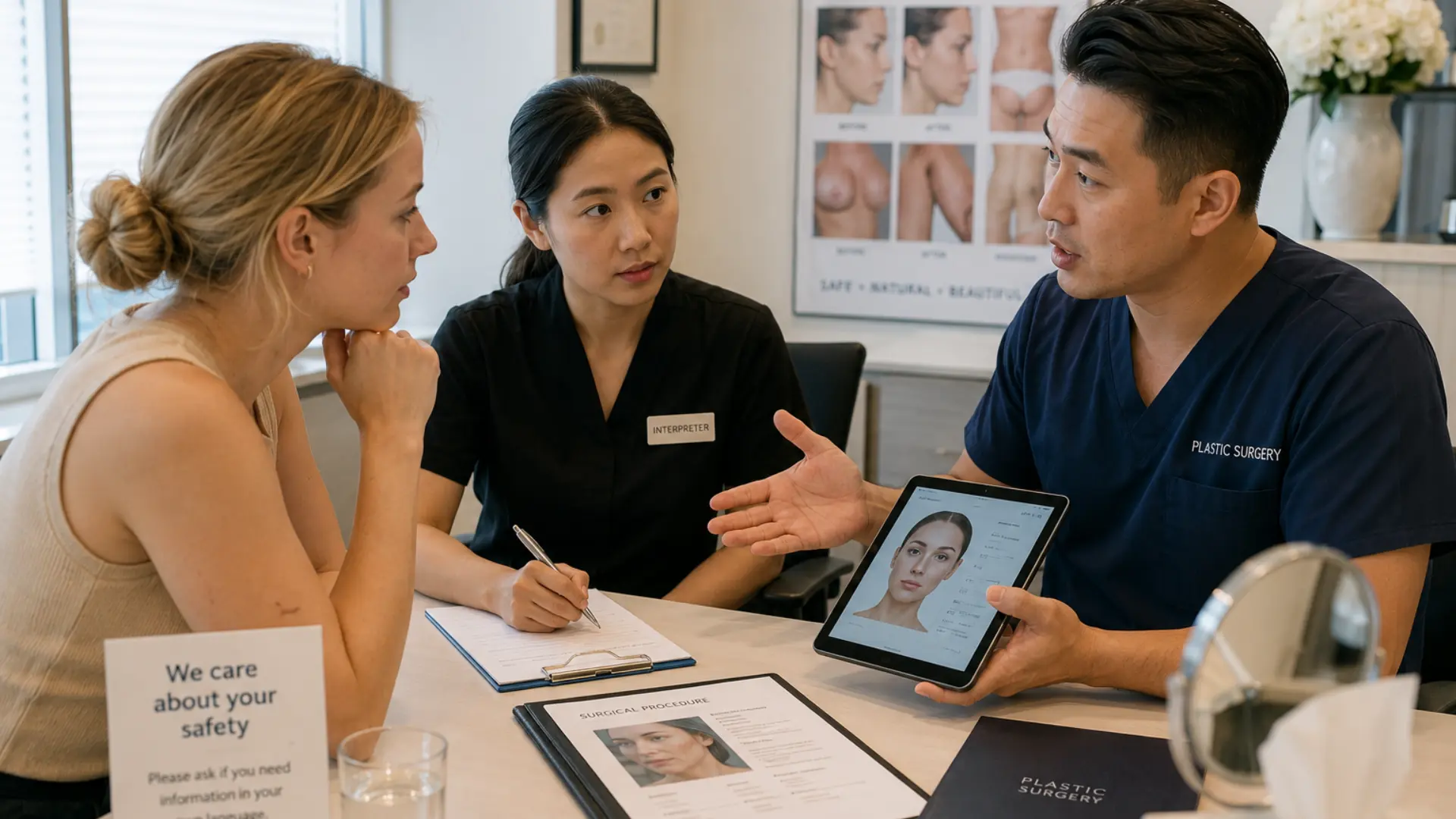
Cosmetic procedures rely on precise communication. Your surgeon needs to understand exactly what you want, and you need to understand exactly what they can realistically deliver, along with the risks involved. When language barriers in cosmetic surgery abroad get in the way, that exchange breaks down.
A rushed conversation through broken English, a receptionist translating on the fly, or a smiling nod that hides genuine confusion can all mask a serious communication gap. Patients often only discover the problem once they’re home, recovering from a result that doesn’t match what they thought they’d agreed to.
How miscommunication can affect your results and safety
Poor communication isn’t just frustrating. It can directly affect the safety and outcome of your procedure.
Misunderstood risks and complications
Every surgical procedure carries risks, and cosmetic surgery abroad risks are no exception. If a surgeon explains potential complications quickly, in a second language, or relies on a staff member with limited medical vocabulary, important warnings can be lost. A patient might walk into surgery without truly understanding the chance of infection, scarring, implant failure or worse.
Consent that isn’t fully understood
Informed consent is a legal and ethical cornerstone of any medical procedure. If your consent form is presented only in the clinic’s own language, or explained through a rushed summary, you may be signing away your right to raise concerns later without ever having genuinely understood what you agreed to.
Aftercare instructions lost in translation
Recovery instructions matter just as much as the surgery itself. Missing a step, such as how to care for a wound, which medications to avoid, or when to seek urgent help, can turn a manageable complication into a medical emergency, particularly once you’re back home and thousands of miles from the clinic that treated you.

Worried your consent wasn’t properly explained?
If you’re unsure whether you truly understood what you were agreeing to before your procedure, you’re not alone, and it’s worth having that conversation with someone who can look into it properly. Getting in touch with our team for a free claim assessment is a good first step towards understanding where you stand.
Real risks of language barriers in cosmetic surgery abroad
Language barriers in cosmetic surgery abroad don’t just cause awkward moments in the consultation room, they carry genuine, measurable consequences:
- Misjudged expectations, where the patient and surgeon have different understandings of the desired outcome
- Incomplete medical history disclosure, increasing the chance of complications
- Missed pre-operative instructions, such as fasting or medication pauses
- Delayed recognition of complications once the patient returns home
- Limited ability to challenge or query treatment decisions during the consultation
These cosmetic surgery abroad risks are compounded by the fact that many overseas clinics operate outside UK regulatory oversight, meaning there’s often no equivalent body to hold them accountable if something goes wrong.
It’s also worth remembering that cosmetic surgery abroad risks don’t end when you land back in the UK. If a complication only becomes obvious once you’re home, you may find it difficult to get a straight answer from the clinic that treated you, especially if your original consultation relied on patchy translation in the first place.
How to spot a clinic that takes communication seriously
Before booking anything, it helps to have a short checklist in mind:
- Ask directly whether a qualified medical interpreter will be present at every stage, not just during marketing calls
- Request sample consent and aftercare documents in English before you commit
- Check independent reviews for comments about communication, not just results
- Confirm who you can contact, and in what language, if problems arise after you return home
A clinic that’s confident in its standards will usually be happy to answer these questions clearly and promptly. Hesitation or vague reassurances are worth treating as a warning sign.
Practical solutions: how to reduce the risk
The good news is that language barriers in cosmetic surgery abroad can be managed, provided you plan ahead and know what to ask for.
Use a professional medical interpreter
A dedicated medical interpreter is far more reliable than a bilingual friend or a translation app. Medical interpreters understand clinical terminology and are trained to convey nuance accurately, including risks, consent details and aftercare guidance. Ask your clinic in advance whether a qualified interpreter will be present at every consultation, not just the initial sales call.
Get written material in your own language
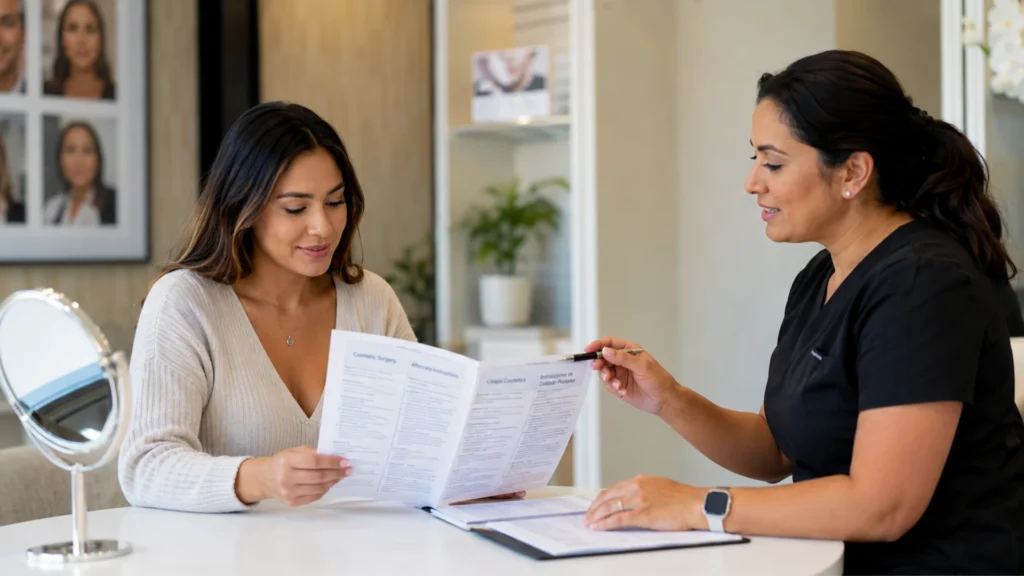
Request that your treatment plan, consent forms and aftercare instructions are provided in English, in writing, before you travel. This gives you time to read everything carefully, ask questions, and keep a record you can refer back to later.
Choose accredited clinics with language support
Clinics that regularly treat international patients are more likely to have proper language support built into their process, rather than relying on informal translation. Look for accreditation, dedicated patient liaison staff, and reviews that specifically mention communication quality.
Plan your aftercare communication before you travel
Before you leave the clinic, confirm exactly how you’ll communicate if something goes wrong once you’re home. Ask whether follow-up consultations will be conducted with a medical interpreter present, and clarify what support is available if you need urgent advice outside clinic hours.
For further guidance on the wider risks of travelling for treatment, the NHS guidance on cosmetic surgery abroad is a useful independent resource to read before you book anything.
What to do if a language barrier led to a poor outcome
If you believe language barriers in cosmetic surgery abroad contributed to a poor result, whether that’s an unexpected outcome from a rhinoplasty procedure that didn’t go as explained, complications following breast surgery you didn’t fully consent to, or problems after dental treatment abroad, it’s worth finding out whether you have grounds for a cosmetic surgery compensation claim.
A poor understanding of consent, risks or aftercare due to a language barrier can be a relevant factor in establishing negligence, particularly if the clinic failed to take reasonable steps to ensure you understood what you were agreeing to. Reviewing your options and how the claims process works can help you decide whether to take things further.
Ready to find out if you can claim?
If communication problems left you confused about your treatment, your consent, or your aftercare, you don’t have to work out what happened on your own. Our team can review the details of your case and explain, in plain English, whether you may be entitled to compensation.