
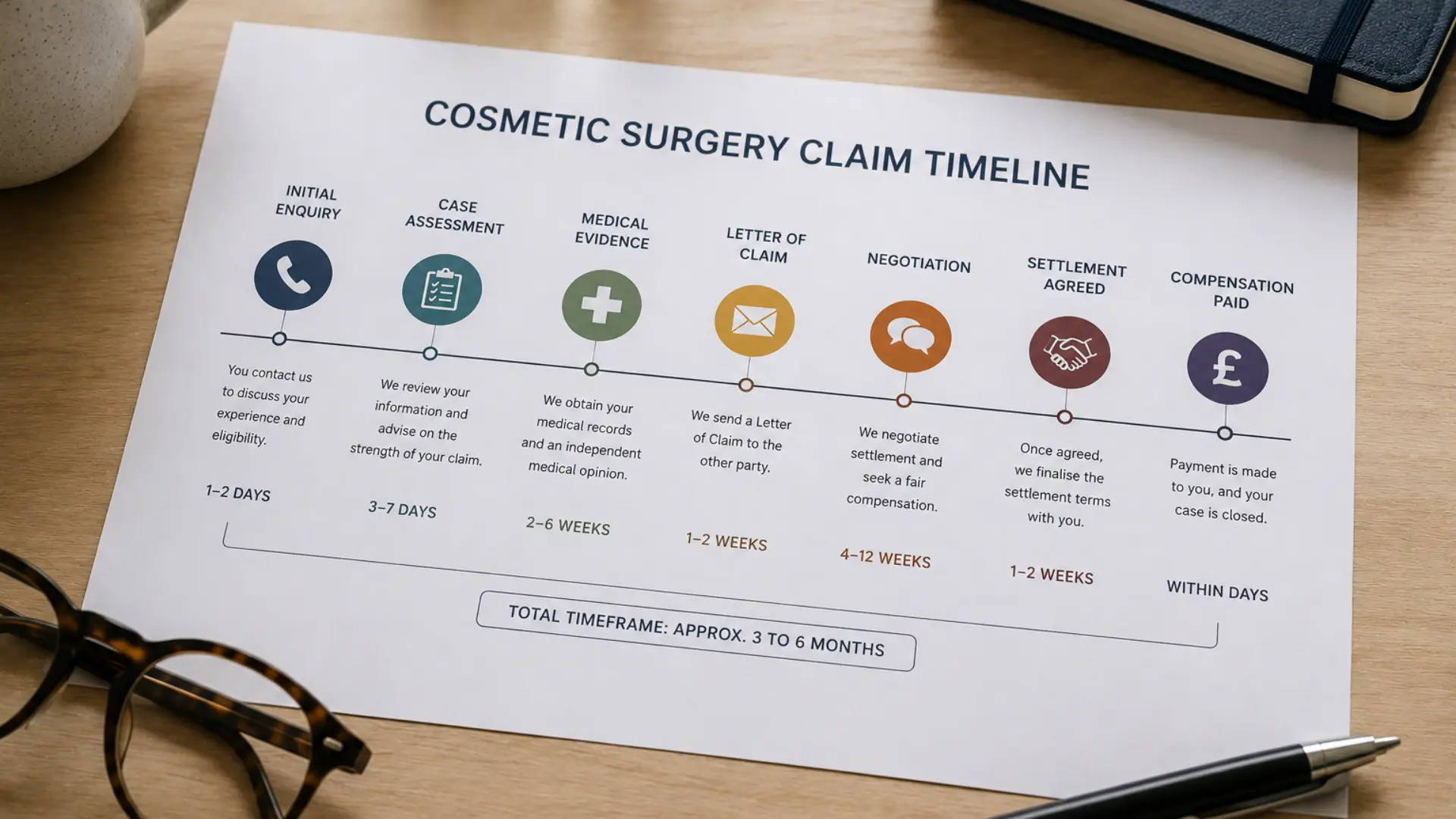
Cosmetic surgery claim timeline: what happens after you start your claim
Starting a claim is often the easiest part. What clients want to know next is the cosmetic surgery claim timeline — how long each stage takes and what to expect along the way.
Every case moves at its own pace, but most follow the same broad structure. This guide walks you through what happens once your cosmetic surgery claim process begins, so you always know what’s coming next.
We’ll cover each stage in order, from your first phone call right through to settlement, with realistic timeframes for the parts clients ask about most.
What happens immediately after you start a cosmetic surgery claim
Once you’ve made contact with a solicitor, the cosmetic surgery claim process begins with a first consultation. Your solicitor will listen to what happened, ask questions about your treatment, and explain whether you have grounds for a cosmetic surgery negligence claim.
This first stage usually takes one to two weeks. Your solicitor will confirm they can act for you, often on a no win, no fee basis, and set out the next steps clearly so you’re never left guessing.
What evidence do you need at this stage?
- Written notes about what went wrong and when you first noticed it
- Photographs of the affected area, ideally taken at intervals
- Correspondence with your clinic or surgeon
- Receipts for treatment costs or related travel
- Consent forms and any aftercare instructions
The more evidence you can provide early on, the faster your solicitor can assess your case. This is one of the biggest factors in how long a cosmetic surgery claim process takes overall.
Don’t worry if you don’t have everything to hand straight away. Your solicitor can help you request missing records and will guide you on what’s genuinely useful versus what can wait.
Requesting your medical records and instructing an expert
Once your solicitor has agreed to act, the next stage of the cosmetic surgery claim process is gathering your full medical records. Clinics and hospitals are usually given several weeks to respond, and this step can take four to six weeks depending on how quickly the practitioner cooperates.
At the same time, your solicitor will identify an independent medical expert. This part of the cosmetic surgery claim process is essential — the expert’s opinion will determine whether your treatment fell below an acceptable standard of care.
The medical assessment stage explained
The medical assessment is one of the most important points in any cosmetic surgery negligence claim. An independent specialist reviews your medical records, examines the affected area where relevant, and gives a professional opinion on what happened.
This stage typically takes six to twelve weeks to arrange and complete. It’s worth allowing enough time after your original procedure so the full extent of the harm is properly understood before the assessment goes ahead.
If your case involves breast surgery compensation or another specific procedure, the expert instructed will usually specialise in that area, which can affect how quickly a suitable assessor is found.

What happens after the medical assessment
Once the assessment report is ready, your solicitor reviews the findings carefully. They’ll check the report accurately reflects the impact of your injury and clearly links the negligence to the harm you’ve experienced.
Depending on the outcome, there may be a need for further evidence, such as additional expert opinions or updated medical records. This part of the cosmetic surgery claim timeline can add a few extra weeks if anything needs clarifying.
Not sure about your cosmetic surgery claim timeline?
Every case is different, and it helps to talk it through with someone who knows the process inside out. Our team can look at your situation and give you a realistic idea of what’s ahead. Get in touch with our team for free, no-obligation advice.
Submitting your claim and waiting for a response
With the medical evidence in place, your solicitor formally submits your cosmetic surgery negligence claim to the practitioner, clinic, or their insurer. This letter sets out what went wrong and the compensation being sought.
The other side is then given a set period, often several months, to investigate and respond. They may admit fault, deny the claim, or ask for more information, and how they respond has a big impact on the rest of the cosmetic surgery claim timeline.
Negotiation and settlement timelines
Most cosmetic surgery negligence claims are settled through negotiation rather than going to court. If the other side accepts responsibility early, this stage can move fairly quickly, sometimes wrapping up within a few months.
Straightforward cases where liability isn’t disputed can sometimes reach settlement within six to nine months of the claim being submitted. Cases involving more complex injuries, or where fault is contested, understandably take longer.
Throughout negotiations, your solicitor will keep you updated on any offers made and advise whether they represent a fair reflection of your injuries, losses and ongoing care needs before you decide whether to accept.
What happens if your claim doesn’t settle
If negotiations don’t lead to a fair settlement, your case may proceed to court. This isn’t the outcome in most cases, but it’s a possibility your solicitor will prepare you for from the outset of the cosmetic surgery claim process.
Court proceedings can extend the cosmetic surgery claim timeline by a further twelve to eighteen months, sometimes longer for particularly complex cases. Your solicitor will continue to explore settlement at every stage, even after court papers have been filed.
Factors that affect how long your claim takes
No two cases follow exactly the same cosmetic surgery claim timeline. A number of factors can speed things up or slow them down along the way:
- How complex your case is, including how many procedures or experts are involved
- The severity of your injury and its impact on your daily life
- Whether the clinic or practitioner disputes the claim
- How quickly evidence and medical records can be gathered
- Whether your procedure was carried out in the UK or abroad
Working with a specialist team helps keep your cosmetic surgery claim process moving as efficiently as possible, chasing responses and managing correspondence so you don’t have to.
It’s also worth remembering that a slower claim isn’t necessarily a weaker one. Sometimes extra time is spent building stronger evidence, which can lead to a better outcome in the end.
The cosmetic surgery claim timeline at a glance
As a general guide, here’s how the cosmetic surgery claim timeline tends to break down:
- Initial consultation and evidence gathering: a few weeks
- Medical records and expert instruction: four to six weeks
- Medical assessment: six to twelve weeks
- Negotiation and settlement (straightforward cases): six to nine months in total
- Court proceedings, where needed: an additional twelve to eighteen months
These are general timeframes rather than guarantees. Your solicitor will give you a clearer picture once they understand the specifics of your cosmetic surgery negligence claim. It’s also worth checking your claim falls within the applicable time limits — The Law Society is a good starting point for wider guidance on working with regulated solicitors, and most claims must be started within three years of the negligent treatment, or the date you became aware of it.
Ready to find out where your cosmetic surgery claim stands?
If you’re dealing with complications from a procedure, or you’re just starting to explore your options, understanding the cosmetic surgery claim timeline can make the whole process feel far less daunting. Our team is on hand to explain exactly what happens next, with honest advice and no pressure.
Get in touch today and let’s talk through your situation, on a no win, no fee basis.