

Do collagen supplements actually work?
Collagen supplements are everywhere. They are in your social media feed, on the shelves of every health shop, and endorsed by influencers promising younger skin, stronger joints, and better hair. But collagen supplements — do they actually work, or is the hype running well ahead of the science?
The answer, as with most things in nutrition and health, is nuanced. There is genuine research to support some of the claims, but also significant limitations in that research — limitations that are not always made clear in the marketing. This article breaks down what the evidence actually says, what collagen is and how it works in the body, and what you should understand before deciding whether to spend your money on it.
What is collagen and why does it matter?
Collagen is the most abundant protein in the human body. It forms the structural framework of skin, bones, cartilage, tendons, and ligaments — essentially the connective tissue that holds everything together. Without it, skin loses its elasticity and firmness, joints lose their cushioning, and bones become more brittle.
Your body produces its own collagen by breaking down dietary protein into amino acids and reassembling them as needed. The key amino acids involved are glycine, proline, and hydroxyproline — all found in protein-rich foods. The problem is that collagen production begins to slow in your mid-twenties and continues to decline by roughly one per cent per year after the age of forty. By the time you reach eighty, your body has a fraction of the collagen it once had.
Several lifestyle factors accelerate this decline: smoking, excess alcohol, poor sleep, too much sun exposure, and a diet high in added sugar all damage or reduce the body’s natural collagen. This is why many people look to collagen supplements as a way to compensate — but whether those supplements actually reach where they are needed is the central question.
How do collagen supplements actually work in the body?
This is where the science becomes more complicated. When you take a collagen supplement — whether as a powder, capsule, or drink — your digestive system breaks it down into amino acids, just as it would with any other protein you eat. The body then uses those amino acids to produce whatever proteins it currently needs, which may or may not be collagen.
The idea that taking collagen directly replenishes the collagen in your skin or joints is an oversimplification. You cannot direct where your body sends those amino acids. If you are deficient in protein generally, supplementing with collagen may give your body more raw material to work with — but eating any good-quality protein source would, in theory, have a similar effect.
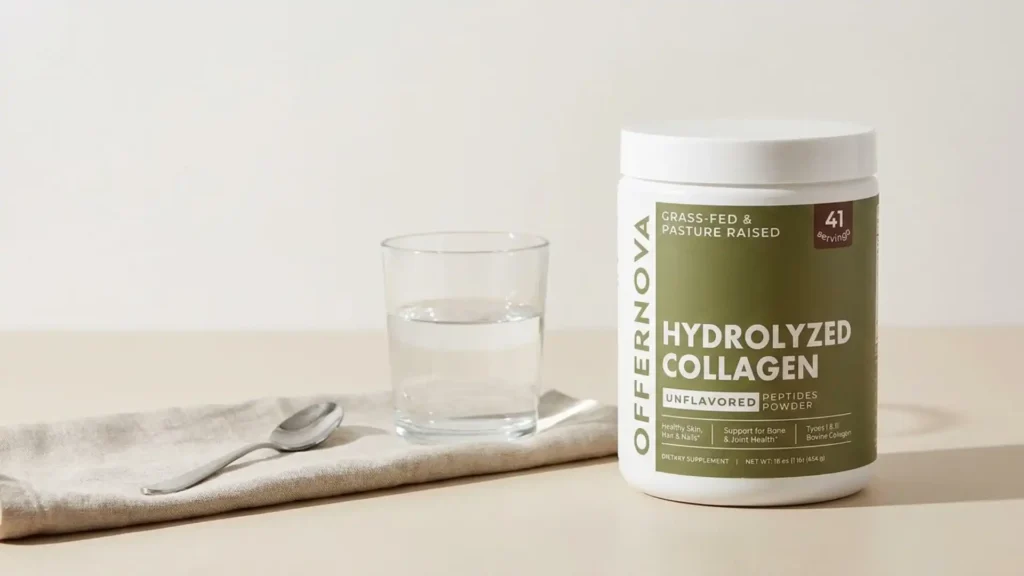
Where the argument for collagen supplements becomes more interesting is with hydrolysed collagen (also called collagen peptides or collagen hydrolysate). This is collagen that has already been broken down into shorter chains of amino acids, which are thought to be more easily absorbed by the body than intact protein. Some research suggests that certain peptides found in hydrolysed collagen — particularly prolylhydroxyproline and hydroxyprolylglycine — may signal the body to increase its own collagen production when they are absorbed into the bloodstream.
Collagen for skin: what does the research say?
Most of the consumer interest in collagen supplements centres on skin. The claims are compelling: better hydration, fewer wrinkles, improved elasticity. And the research is — cautiously — supportive.
Several studies, including a review and meta-analysis examining more than a thousand participants across nineteen trials, found that collagen supplements taken over a period of three months produced measurable improvements in skin hydration, elasticity, and density. A 2018 randomised controlled trial using 1,000 mg of collagen peptides daily found that after twelve weeks, participants had more elastic, more hydrated skin and fewer visible wrinkles compared to the placebo group.
However, the evidence has important limitations that are not always highlighted:
- Many studies are funded by supplement manufacturers, introducing the risk of bias
- Several trials include other active ingredients alongside collagen, making it difficult to isolate its specific effects
- The European Food Safety Authority (EFSA) has not approved any health claims for collagen supplements, concluding that the evidence submitted is not yet sufficiently robust
- Independent researchers note that truly unbiased, large-scale trials are still lacking
The honest picture is that the evidence for collagen for skin is promising but not conclusive. If you take a quality hydrolysed collagen supplement consistently for at least two to three months, there is a reasonable chance you will notice an improvement in skin texture and hydration. But the effect is likely to be modest, and results vary significantly between individuals.
Considering collagen supplements for skin or joint support?
The evidence for collagen supplements is promising but still developing. Understanding what they can realistically achieve — and where cosmetic treatments may be suggested instead — helps you make safer decisions. Get expert guidance
Collagen for joints: the evidence for arthritis and cartilage health
Collagen for joints has been the subject of a growing body of research, particularly in relation to osteoarthritis. Type II collagen — the form found predominantly in cartilage — has been investigated as a potential support for joint health in both athletes and people managing chronic joint conditions.
A randomised trial comparing 40 mg per day of undenatured type II collagen against glucosamine and chondroitin (two widely used joint supplements) found that after six months, the collagen group reported significantly less pain and stiffness and better overall joint function. An analysis of forty-one animal and human studies, including twenty-five clinical trials, found benefits for osteoarthritis and cartilage repair across a range of collagen types, doses, and brands.
For joint health, the picture is more encouraging than it is for skin — though still qualified. The research quality varies, and many studies are small or short in duration. There is limited evidence that collagen helps with rheumatoid arthritis, where inflammation is the primary driver, as opposed to the structural cartilage wear associated with osteoarthritis.
What type of collagen is best for joint support?
Type II collagen — particularly undenatured type II collagen — is the form most studied for joint health. It is typically derived from chicken breastbone cartilage and works through a different mechanism to hydrolysed collagen. Rather than providing amino acid building blocks, it is thought to interact with the immune system to reduce the breakdown of cartilage. A dose of around 40 mg per day is the amount most supported by the available evidence.
Different types of collagen supplements explained
Not all collagen supplements are the same, and the differences between types matter for what you are trying to achieve.
- Hydrolysed collagen (collagen peptides): broken down into small amino acid chains for easier absorption; best studied for skin, bone, and general tissue support; comes from bovine (cow), porcine (pig), or marine (fish) sources
- Undenatured type II collagen: not broken down; works via immune modulation rather than amino acid supply; most relevant for joint and cartilage health
- Gelatine: a cooked, less processed form of collagen; provides similar amino acids but is considered less effective than hydrolysed collagen for absorption
- Vegan “collagen boosters”: these do not contain collagen at all — they contain vitamin C, zinc, and amino acids that support the body’s own collagen production; a genuinely different product
In terms of format, powders and liquids generally provide more collagen per serving than tablets or gummies, which often contain lower doses and may include added sugars or fillers. If you choose to take collagen supplements, aim for at least 5–10 g of hydrolysed collagen per dose for skin support, or 40 mg of undenatured type II collagen for joints.
Are collagen supplements safe?
Collagen supplements are generally considered safe for most adults. Side effects are uncommon, though some people report mild digestive discomfort. There are, however, a few things worth knowing before you start.
First, collagen is always derived from animal sources — usually bovine, porcine, marine, or chicken — so it is not suitable for vegans or those who avoid certain animal products for religious or ethical reasons. Plant-based “collagen” products do not contain actual collagen.
Second, some collagen products have been found to contain traces of heavy metals or other contaminants, particularly in lower-cost products that have not undergone independent third-party testing. If you do decide to take collagen supplements, choosing a product that has been independently tested for purity is a sensible precaution.
Third, people with kidney or liver conditions that affect protein metabolism should consult a GP or healthcare professional before increasing their protein intake via supplements. Those taking prescribed medications should also check for potential interactions.
Natural ways to support your body’s collagen production
Before spending money on collagen supplements, it is worth understanding that your body already has the machinery to produce collagen — it just needs the right inputs and environment to do so effectively. Several straightforward lifestyle choices support natural collagen production, and the evidence behind them is considerably stronger than the evidence for most supplements.
- Eat enough protein: collagen is made from amino acids, and a varied, protein-rich diet provides the raw materials the body needs
- Get enough vitamin C: essential for the enzyme reactions involved in collagen synthesis; found in citrus fruits, berries, peppers, and broccoli
- Protect your skin from UV: sun exposure is one of the primary drivers of collagen breakdown in the skin
- Avoid smoking: smoking significantly accelerates collagen degradation across the body
- Limit added sugar: sugar reacts with collagen in the skin through a process called glycation, making it stiffer and less elastic
- Prioritise sleep and manage stress: both have a direct impact on the body’s ability to repair and regenerate tissue
For many people, addressing these fundamentals will do more for their skin and joints than any supplement. Collagen supplements may provide an additional benefit on top of a healthy foundation — but they are unlikely to compensate for a poor diet, little sleep, and excessive sun exposure.
Collagen supplements and cosmetic treatments: what patients should know
Collagen plays a central role in many professional cosmetic treatments. Procedures such as radiofrequency skin tightening, microneedling, and laser resurfacing work in large part by stimulating the skin’s own collagen production. For patients considering these treatments, or exploring alternatives to plastic surgery that target skin quality and laxity, understanding how collagen behaves in the skin is genuinely useful context.
Some practitioners recommend supplementing with hydrolysed collagen in the weeks around certain aesthetic procedures, on the basis that providing the body with additional amino acids during a period of active collagen stimulation may enhance the results. The evidence for this specific approach is limited, but the reasoning is logical. It is worth discussing with your practitioner if you are considering a course of skin treatment.
What is more clearly established is that collagen quality affects how skin heals and responds after any intervention — surgical or non-surgical. Patients with significantly depleted collagen, whether through age, lifestyle, or medical conditions, may experience slower healing or less satisfactory outcomes. This is one reason why understanding your skin’s condition before undergoing any cosmetic procedure matters. If you are considering surgery and want to understand the full picture of what can go wrong and what your rights are, it is worth reading about how cosmetic surgery claims work before making any decisions.
So, should you take collagen supplements?
The honest answer is: it depends on your situation, your goals, and your expectations.
If you are interested in skin health, there is enough positive evidence — even if not conclusive — to make hydrolysed collagen supplements worth trying for a sustained period of at least two to three months. Choose a product from a reputable brand that has been independently tested, use a powder or liquid form rather than gummies, and combine it with a vitamin C-rich diet for best results.
If you are managing joint pain or early osteoarthritis, undenatured type II collagen at a dose of around 40 mg per day has reasonable evidence behind it and appears to be safe for most adults. Hydrolysed collagen at higher doses (10–15 g per day) may also provide some benefit for tendons and cartilage, particularly when taken around exercise.
If you are broadly healthy and eating a varied diet with adequate protein, the incremental benefit of collagen supplements is likely to be modest. The same money spent on sunscreen, better sleep, quitting smoking, and a more balanced diet would almost certainly do more for your skin and joints in the long run.
For anyone who is considering cosmetic procedures — surgical or otherwise — to address skin concerns that collagen decline has contributed to, making sure you have clear, honest information about the risks involved is essential. Understanding what rhinoplasty compensation or breast surgery compensation involves if something goes wrong can help you make a more fully informed decision before committing to anything permanent.
For an in-depth review of the clinical evidence on collagen supplementation across skin, joint, and bone health, the Arthritis Foundation’s overview of collagen supplements provides a detailed and well-referenced summary.
Final thoughts
Collagen supplements are neither a miracle cure nor a complete waste of money. The research suggests they can offer meaningful benefits — particularly for skin hydration and elasticity, and for joint comfort in osteoarthritis — when taken consistently at an appropriate dose over several months.
The key is to approach them with realistic expectations. They are one tool among many, and they work best when combined with the lifestyle choices that support your body’s own collagen production. If you are expecting dramatic, surgery-like results from a daily supplement, you will likely be disappointed. If you are looking for a modest, gradual improvement that builds on an already healthy foundation, the evidence suggests they may genuinely help.
As with any supplement, quality matters enormously. Choose independently tested products, be cautious of extravagant claims, and consult a healthcare professional if you have any underlying health conditions before starting a new supplement regimen.
Thinking about cosmetic treatments to improve skin quality?
Collagen supplements may support skin hydration and elasticity, but they cannot replace professional treatments or surgery. Understanding the risks, expected results, and what your options are if something goes wrong helps you make informed decisions before proceeding. Our team can explain your rights and what support is available if treatment outcomes fall short.