

5 mistakes to avoid when making a cosmetic negligence claim
If you are thinking about making a cosmetic negligence claim, you are probably already dealing with a difficult situation. A procedure that went wrong can leave you with physical complications, emotional distress, and a lot of unanswered questions. The last thing you want is to make avoidable mistakes that weaken your case or slow things down even further.
Understanding how to claim for cosmetic surgery gone wrong properly — and what traps to avoid — makes a real difference to how smoothly the process goes. This article walks you through the five most common mistakes, explains why they matter, and tells you what to do instead.
Mistake 1: Waiting too long before taking legal advice
Cosmetic surgery compensation claims are subject to a strict time limit. In the UK, most people have three years from the date they knew, or reasonably should have known, that the treatment caused harm. After that window closes, you typically lose the right to claim — regardless of how strong your case might be.
Many people delay because they hope complications will resolve on their own, or because they feel uncertain about whether they have grounds for a cosmetic negligence claim. That hesitation is understandable. But it can cost you.
The earlier you seek advice, the more time there is to gather evidence, obtain medical records, and build a thorough case. Complications that emerge months after a procedure are still claimable — but only if you act within the legal timeframe once you become aware of the problem.
If you are unsure whether the time limit has started running for your situation, the safest approach is to get a free case review as soon as possible. Our step-by-step claims process is explained on our How It Works page, so you know exactly what to expect from the start.
Mistake 2: Not keeping evidence from the beginning
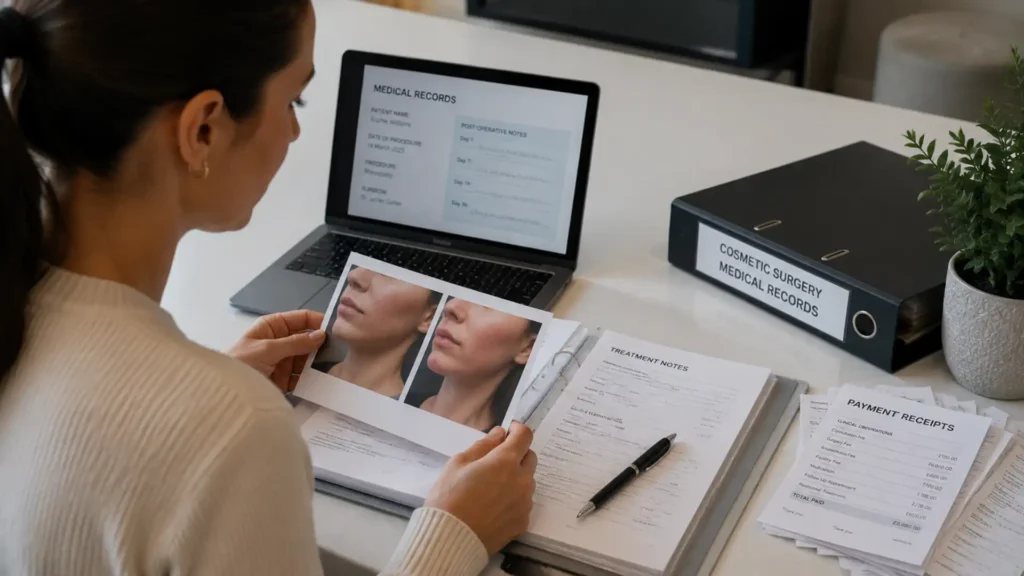
One of the most important things you can do when how to claim for cosmetic surgery gone wrong comes to mind is to start documenting everything immediately. Yet this is the step that most people miss — either because they don’t know it’s important, or because they are focused on recovering and dealing with the emotional aftermath.
Strong evidence is at the heart of every successful cosmetic negligence claim. The types of evidence that are most useful include:
- Photographs of the affected area taken at regular intervals from the time you first noticed complications
- All correspondence with the clinic, surgeon, or practitioner — including emails, letters, and text messages
- A written log of symptoms, dates, and how the complication has affected your daily life
- Copies of your treatment notes, consent forms, and any post-operative instructions you were given
- Receipts or invoices for the original procedure, plus any corrective or follow-up treatment you have paid for
If you did not start collecting this material straight away, do not panic. It is still worth compiling what you have now and noting the dates as accurately as you can recall. A specialist can also assist with obtaining medical records and clinic notes that you may not have direct access to.
Mistake 3: Undergoing further procedures before taking legal advice
After a cosmetic procedure goes wrong, it is natural to want to fix the problem as quickly as possible. Some clinics actively encourage you to return for revision surgery, sometimes offering it free of charge or at a discount. While this may seem appealing, proceeding with further treatment before getting legal advice can seriously complicate your cosmetic negligence claim.
Here is why this matters. Once you have had additional procedures, it becomes much harder to establish a clear chain of causation between the original treatment and the harm you suffered. Medical experts reviewing your case will have to disentangle the effects of multiple interventions, which can make it more difficult — and sometimes impossible — to prove exactly when and how the negligence occurred.
Before any further treatment, you should:
- Seek independent medical advice on the extent of the damage and your options
- Speak to a solicitor who specialises in cosmetic surgery compensation claims
- Make sure any further treatment is clearly documented separately from the original procedure
If you have already had some corrective treatment, all is not necessarily lost — but it is important to seek advice now rather than proceeding further without guidance. For complications involving specific procedures, our dedicated pages on breast surgery compensation, dental surgery compensation, and rhinoplasty compensation explain what is typically claimable in each case.
Worried you may have already made one of these mistakes?
Even if you have delayed, had further treatment, or lost some evidence, a cosmetic negligence claim may still be possible. The best way to find out where you stand is to talk to someone who knows this area of law. Our team reviews every case individually and gives you honest, clear guidance — get in touch with us today and we can assess your situation in a free, no-obligation conversation.
Mistake 4: Confusing disappointment with negligence
This is one of the most common sources of confusion for anyone exploring how to claim for cosmetic surgery gone wrong. Not every poor outcome is a valid basis for a cosmetic negligence claim. Understanding the difference early helps you manage your expectations and pursue your case on the right grounds.
Cosmetic procedures carry inherent risks. A surgeon who clearly explains those risks beforehand, performs the procedure to an accepted standard, and provides appropriate aftercare has generally met their legal duty of care — even if you are unhappy with the result.
A cosmetic negligence claim requires something more than disappointment. It requires evidence that:
- The practitioner failed to meet an acceptable professional standard — in the procedure itself, or in their pre-operative assessment, consent process, or aftercare
- That failure directly caused the harm you suffered — not just a known risk that was properly explained
- The harm had a real impact on you, whether physical, psychological, or financial
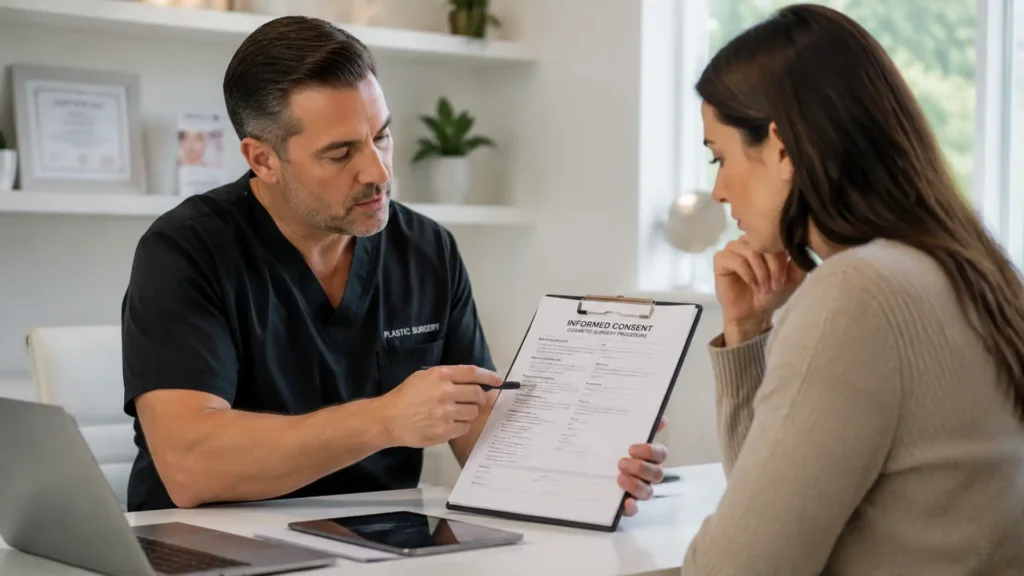
A common example is where a surgeon failed to obtain proper informed consent. If risks were not clearly explained before you agreed to the procedure, and you would have made a different decision had you been told, that can be a strong foundation for a cosmetic surgery compensation claim — even if the technical execution of the surgery was not itself negligent.
According to guidance published by the British Association of Aesthetic Plastic Surgeons (BAAPS), all practitioners have an obligation to be open and honest about the risks, realistic outcomes, and alternatives to any procedure. Where that duty is not met, patients have legal recourse.
Mistake 5: Trying to handle the claim alone or through the clinic
Some people attempt to resolve a cosmetic negligence claim by going back to the clinic directly — complaining through the practice’s own complaints procedure, or negotiating informally with the surgeon or their insurer. While this is understandable, it can significantly weaken your position.
Here is why pursuing a cosmetic surgery compensation claim without specialist support tends to backfire:
- Clinics and their insurers are experienced in handling complaints and have an interest in minimising payouts — they will not necessarily volunteer information that supports your case
- Informal settlements agreed directly with the clinic are often far lower than what a properly prepared legal claim would achieve
- Statements you make without legal guidance — in writing or in conversation — can later be used to challenge the strength of your claim
- Medical records and evidence can be lost or become harder to access over time if no formal legal process is in place
Working with a specialist in cosmetic negligence claim cases means having someone in your corner who understands how these cases work, what evidence is needed, and what your claim is genuinely worth. Most specialist claims handlers offer a No Win, No Fee arrangement, meaning there is no financial risk to getting proper representation.
Knowing how to claim for cosmetic surgery gone wrong effectively means not going it alone. Even at the earliest stage, a brief case review can tell you whether you have grounds to proceed and what the realistic value of your claim might be.
A quick recap: what to do instead
To give your cosmetic negligence claim the best possible chance, keep these key points in mind from the start:
- Act quickly — the three-year time limit is absolute, and early action protects your right to claim
- Gather and preserve evidence from the moment you notice a problem — photos, records, and correspondence all matter
- Do not have further treatment until you have independent medical and legal advice
- Understand the difference between negligence and a disappointing but legitimate outcome
- Use a specialist — not the clinic, not a general legal helpline, but someone who works specifically on cosmetic surgery compensation
Following these steps does not just reduce anxiety about the process — it actively improves the strength of your case and the likelihood of a successful outcome.
Start your cosmetic negligence claim with confidence
If your procedure went wrong and you believe negligence may have been involved, our team at Cosmetic Claims is here to help. We specialise exclusively in cosmetic surgery compensation cases — breast surgery, dental surgery, and rhinoplasty — and we guide you through every stage of how to claim for cosmetic surgery gone wrong with clarity and care. Every case is reviewed on a No Win, No Fee basis, so there is no financial risk to getting started.